
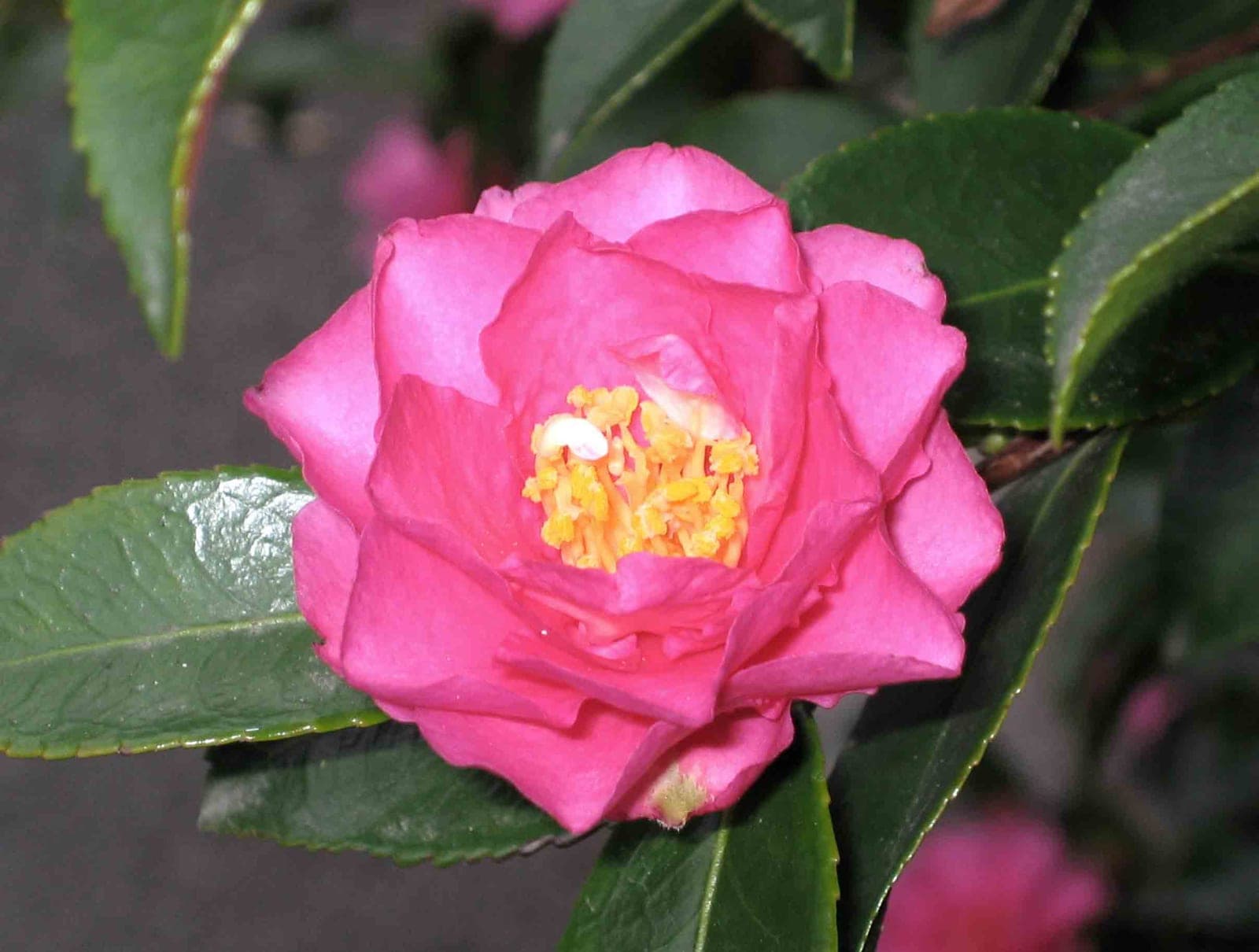
Camellia sasanqua 'Shishi-Gashira' is a dwarf, dense, mounding form of sasanqua camellia - among the smallest and slowest-growing camellias in general cultivation, staying well under 4 feet even at maturity. Semi-double rose-pink flowers cover the plant in fall, set against small, glossy, fine-textured foliage that gives it a tighter, neater look than most other camellias year-round.
Its compact habit makes it one of the most useful camellias for foundation plantings, low borders, and mass groupings where a full-sized shrub would overwhelm the space. Like other sasanquas it tolerates more direct sun than Camellia japonica types, though afternoon shade improves flower color and reduces stress in the hottest parts of its range. Moist, acidic, well-drained soil and a steady mulch layer support the shallow root system.
Camellia sasanqua is native to Japan, not North America, but 'Shishi-Gashira' - its name references a mythical lion's-head dance mask, a nod to the plant's dense, rounded form - has become a staple of southeastern American gardens for its reliable fall color and manageable scale.
Petal blight
Flowers develop small watery spots that rapidly enlarge into soft brown blotches, collapsing the bloom into a slimy mass that clings to the plant instead of dropping cleanly.
Remove and destroy infected blooms and fallen petals, and clear old mulch beneath the plant where the fungus overwinters. Avoid overhead watering; in wet springs a preventive fungicide at bud break helps where it recurs.
Leaf gall
Leaves, buds, or young shoots thicken into pale green, reddish, or whitish fleshy galls that later turn white with a powdery spore bloom before browning.
Pick off and destroy galls before they turn white and shed spores. Improve air circulation and avoid overhead watering in spring. The damage is largely cosmetic and rarely needs fungicide.
Phytophthora Root Rot
Wilting despite moist soil, yellowing leaves, stunted growth, and dark, decayed roots and crown tissue. Vines may collapse during hot weather.
Plant in well-draining soil and avoid waterlogging. Remove and destroy affected vines. Improve drainage with raised beds or amended soil and avoid overwatering.