
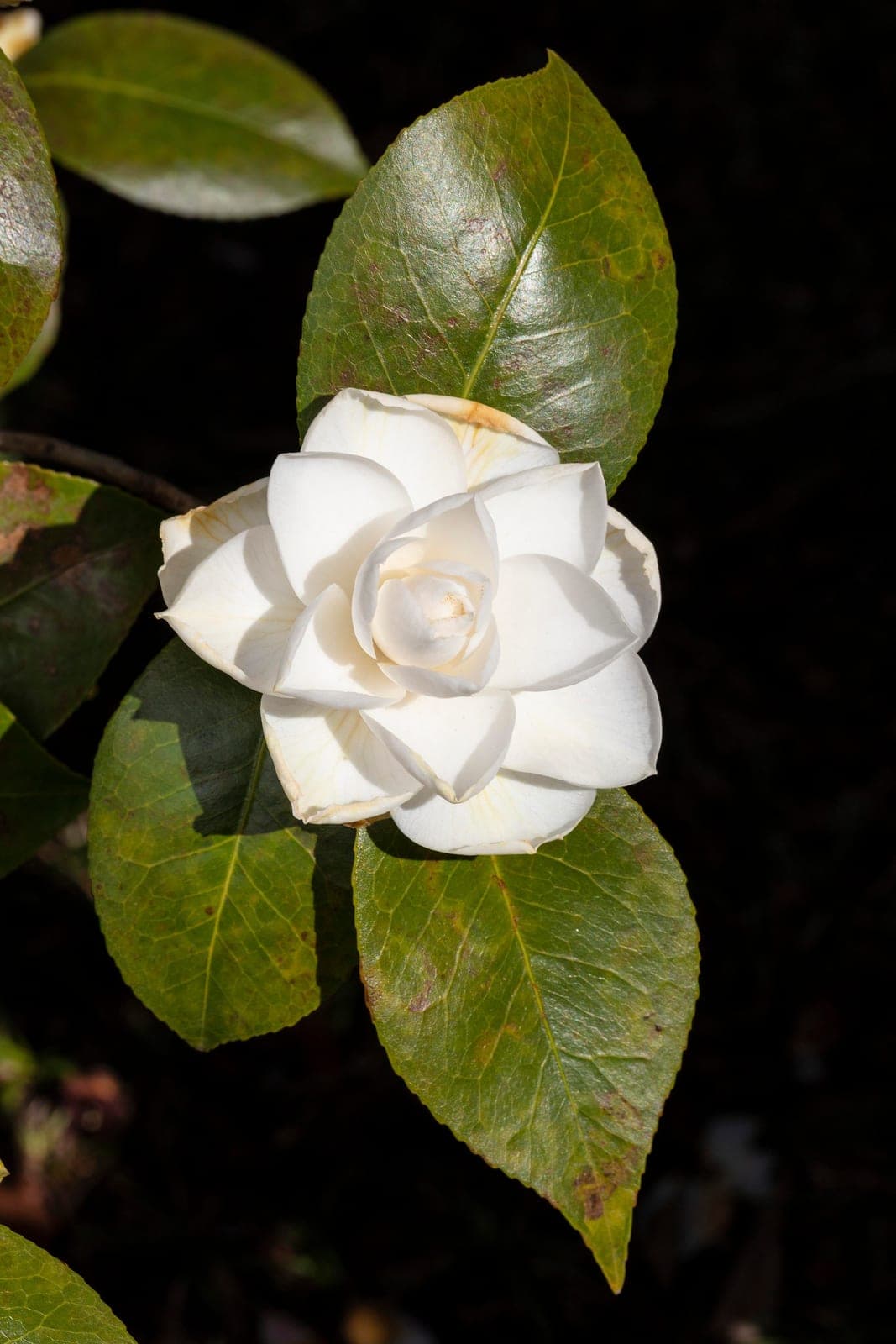
Camellia japonica 'Nuccio's Gem' is a classic formal double white camellia bred by Nuccio's Nurseries of Altadena, California - one of the most influential camellia breeding operations in American horticulture. Densely packed, symmetrical white blooms open from winter into early spring against dark, glossy evergreen foliage, on a full, upright shrub that reads as elegant rather than showy.
Unlike sun-tolerant sasanqua camellias, true Camellia japonica types like this one are classic understory plants and perform best in dappled or part shade - full afternoon sun scorches the foliage and bleaches the flowers. It's especially well suited to the mild, humid Pacific Coast growing conditions where it was bred, though it also thrives throughout the traditional camellia belt of the Southeast. Consistent moisture in acidic, well-drained soil is essential; camellias are notably intolerant of both drought stress and waterlogged roots.
Camellia japonica is native to Japan, Korea, and China, not North America, but has been central to ornamental gardening in California and the American South for well over a century, and remains one of the signature shrubs of a shaded winter garden.
Petal blight
Flowers develop small watery spots that rapidly enlarge into soft brown blotches, collapsing the bloom into a slimy mass that clings to the plant instead of dropping cleanly.
Remove and destroy infected blooms and fallen petals, and clear old mulch beneath the plant where the fungus overwinters. Avoid overhead watering; in wet springs a preventive fungicide at bud break helps where it recurs.
Leaf gall
Leaves, buds, or young shoots thicken into pale green, reddish, or whitish fleshy galls that later turn white with a powdery spore bloom before browning.
Pick off and destroy galls before they turn white and shed spores. Improve air circulation and avoid overhead watering in spring. The damage is largely cosmetic and rarely needs fungicide.
Phytophthora Root Rot
Wilting despite moist soil, yellowing leaves, stunted growth, and dark, decayed roots and crown tissue. Vines may collapse during hot weather.
Plant in well-draining soil and avoid waterlogging. Remove and destroy affected vines. Improve drainage with raised beds or amended soil and avoid overwatering.