
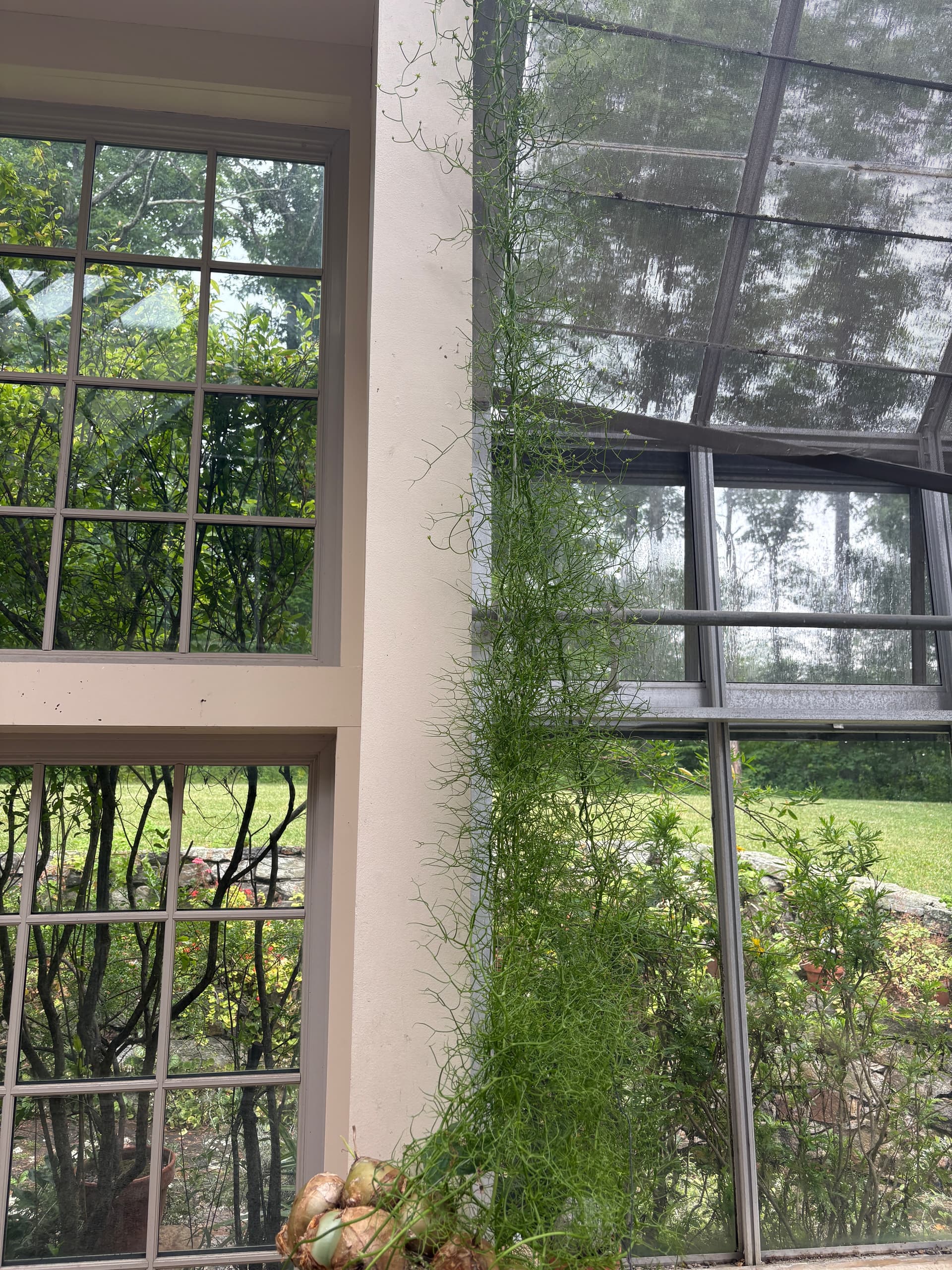
Bowiea volubilis - the Climbing Onion - is one of those plants that stops every visitor in their tracks, and for good reason. What looks like a large, pale green onion sitting brazenly on top of the soil suddenly erupts in spring with a tangle of wiry, twining stems that scramble cheerfully up any nearby support. To grow it well, start with the right potting mix: think desert, not garden. A 50/50 blend of coarse perlite and a lean potting compost works beautifully - the cardinal sin with this plant is a soggy, water-retentive medium, which will rot the bulb from the base faster than you'd believe. Pot it so roughly half the bulb sits above the soil line, place it in bright indirect light, and water only when the soil is completely dry during the growing season. When the stems die back in late summer or autumn, stop watering almost entirely and let the bulb rest in a cool, dry spot until new growth emerges. Outdoors it's only reliably hardy in zones 9a–11b; everywhere else, treat it as a treasured container plant you bring inside before the first frost.
In terms of traditional use, Bowiea volubilis has a long history in southern African ethnobotany - Zulu healers historically used small, carefully prepared doses of the bulb to treat conditions including dropsy, constipation, and chest ailments, and it featured in the traditional pharmacopoeia of several South African communities. That said, the bulb contains potent cardiac glycosides closely related to those in foxglove, which means it is genuinely toxic - to people, to pets, and to livestock - and absolutely not something to experiment with at home. Keep it well out of reach of curious cats and dogs. What it does offer, beyond its ethnobotanical fascination, is a genuinely low-maintenance and deeply unusual long-lived houseplant. A healthy bulb will grow larger and more impressive year on year, and it's drought-forgiving enough that a neglectful week or two won't set it back. Companion it in a sunny windowsill display with other gritty-mix lovers like aloes or haworthias rather than moisture-hungry plants.