
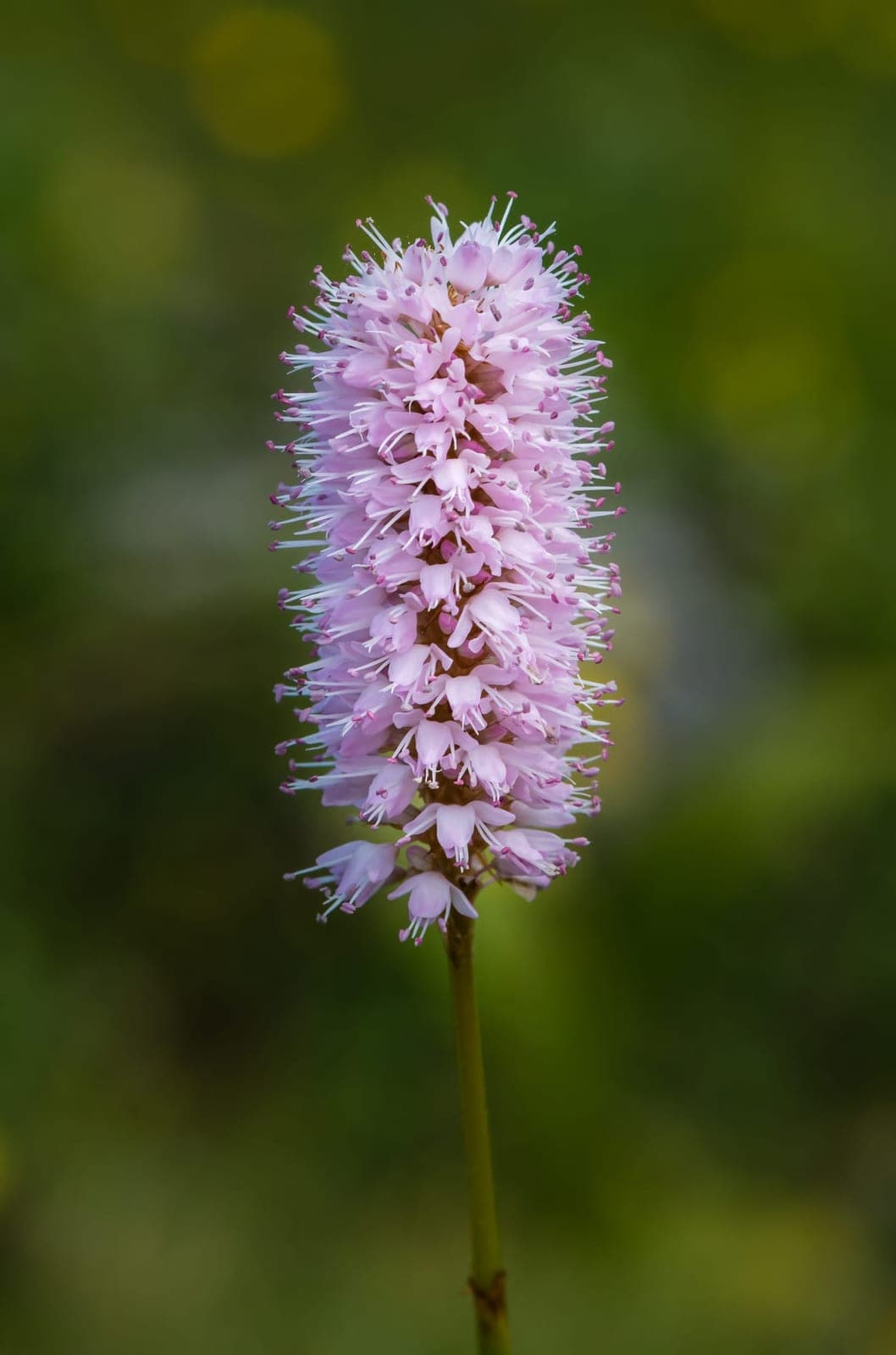
Common bistort is a long-lived herbaceous perennial native to moist meadows and stream margins across Europe and western Asia. It forms dense clumps of broad, lance-shaped basal leaves and sends up upright stems topped with dense, cylindrical pink clusters in late spring. The plant is valued as a reliable ornamental for wet-soil sites and as an edible and medicinal herb with a deep history in northern European tradition.
Bistort spreads slowly by stout, twisted rhizomes - the source of its old common names snakeroot and snakeweed - and establishes best in fertile, consistently moist soil. It tolerates part shade well, making it practical for damp, low-light areas where sun-loving perennials struggle. Divide clumps every three to four years in early spring to maintain vigor. A slightly acidic to neutral pH suits it best, and mulching with compost helps retain the consistent moisture it requires through summer heat.
The young spring leaves are the key ingredient in Easter-ledge pudding, a traditional Cumbrian dish made with bistort leaves, oatmeal, nettles, and other spring greens. The rhizome is rich in tannins and has a long history as an astringent remedy for diarrhea, mouth ulcers, and minor wounds; it has also been used as a gargle for sore throats and topically for hemorrhoids.
Powdery mildew
White or grey powdery coating on leaves - usually starting on older growth in humid conditions or when nights cool.
Improve air circulation by thinning plants. Apply neem oil or potassium bicarbonate spray at first sign. Avoid overhead watering.
Rust
Orange to brown raised pustules on the undersides of leaves, with yellow spotting on the upper surface. Heavy infections cause leaves to yellow and drop.
Remove and destroy infected leaves. Avoid overhead watering and improve air circulation. Apply a sulfur or copper-based fungicide if it spreads. Clear plant debris in fall.
Fungal leaf spot
Brown or purplish spots on the leaves, often ringed with a yellow halo, that spread and merge in warm, humid, or wet weather; heavily spotted leaves yellow and drop early.
Pick off spotted leaves and clear fallen debris to remove overwintering spores. Improve air circulation by thinning, and water at the base so foliage dries quickly. If it persists, apply a copper- or sulfur-based fungicide at the first sign.