
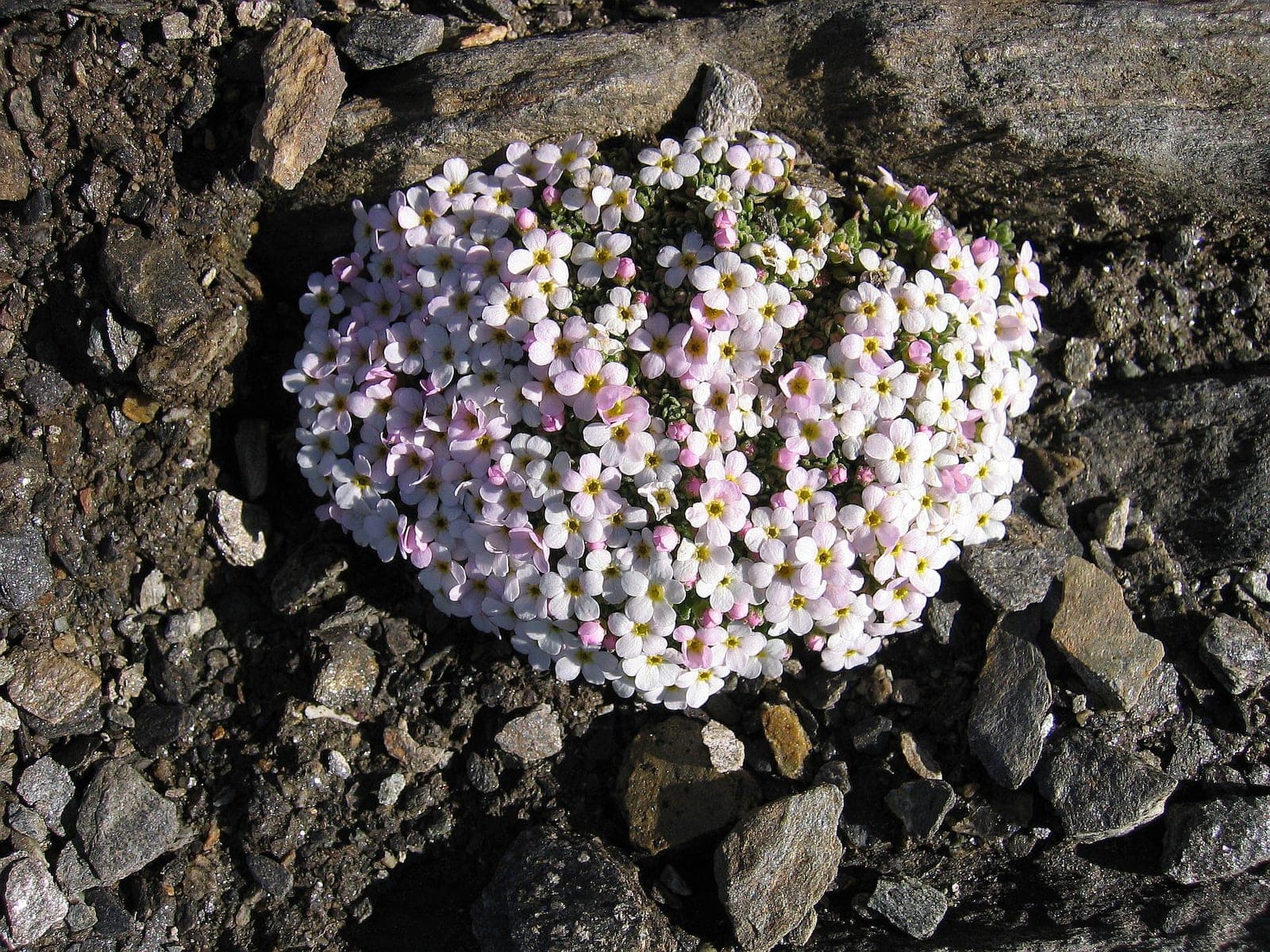
Androsace alpina is a high-alpine cushion plant endemic to the Alps, native to limestone and dolomite scree between 2,500 and 3,200 meters elevation. In cultivation it suits rock gardens, alpine troughs, and crevice gardens, forming tight mats of small glandular-hairy rosettes that produce tiny pink to white flowers in late spring and early summer.
The cushion growth form is a direct adaptation to harsh alpine conditions - it reduces wind drag, insulates the interior, and the glandular leaf hairs limit water loss. In the garden, perfect drainage is non-negotiable; moisture held at the crown, particularly in winter or wet summers, is the primary cause of failure. A gritty, lime-rich soil mix, an open south-facing site, and a top-dressing of fine gravel around each cushion replicate scree conditions. Growing it at lower altitudes, especially where summers are warm and humid, is genuinely difficult and benefits from overhead protection during prolonged wet periods.