
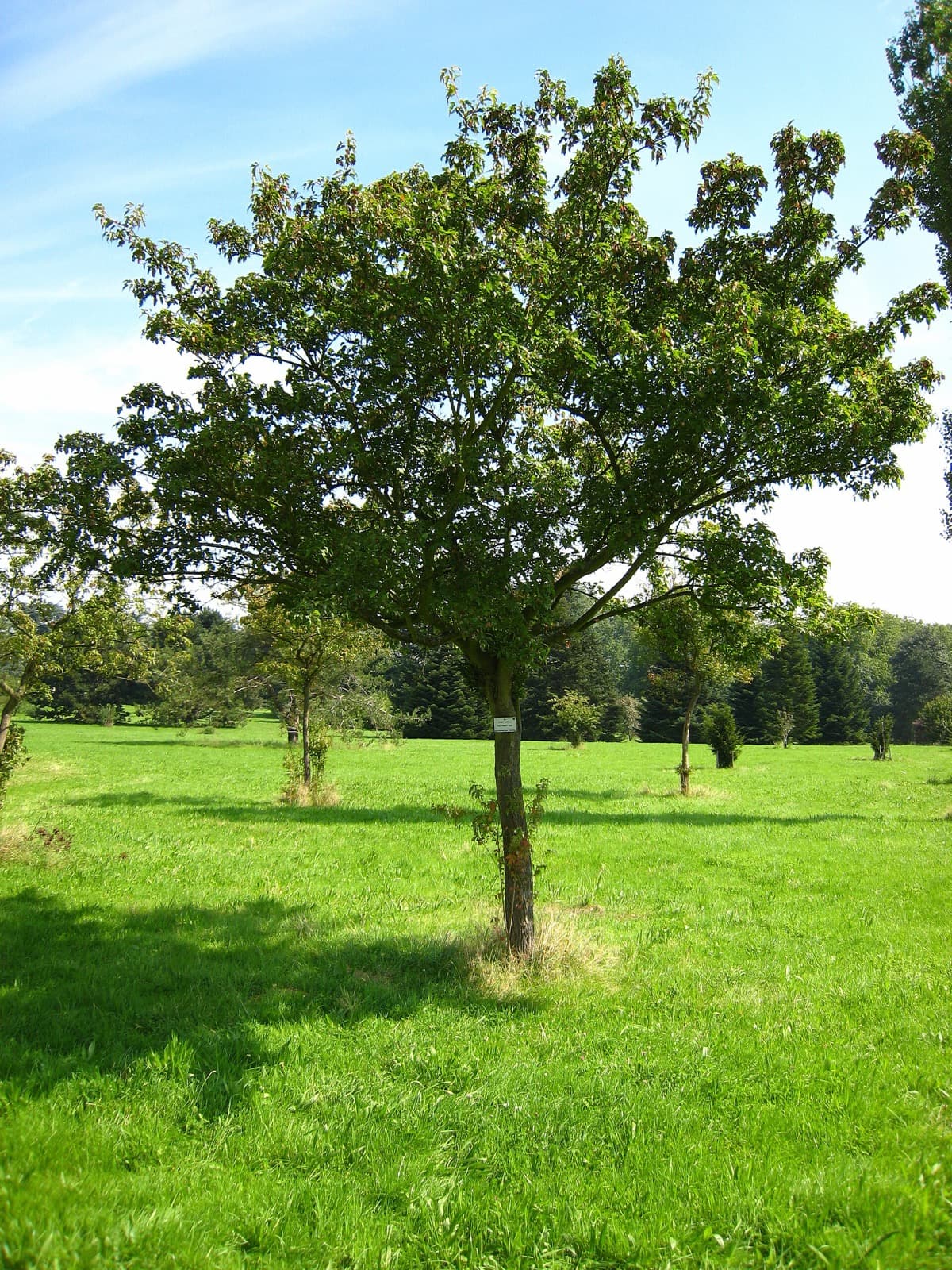
Amur maple is a small deciduous tree or large multi-stemmed shrub native to the Amur River valley and surrounding regions of northeastern Asia. It is among the most cold-hardy maples available for North American landscapes, producing small fragrant white flowers in spring, ornamental red-tinted samaras in summer, and reliably intense red to orange fall color.
It establishes quickly and tolerates a wide range of soils, including clay and compacted urban sites, with good drought tolerance once established. It can be trained to a single trunk or allowed to develop naturally as a large shrub or windbreak. Full sun produces the best fall color. Sucker growth is common at the base and should be removed regularly when a tree form is desired.
Amur maple self-seeds prolifically and has naturalized across much of the upper Midwest and Northeast, colonizing disturbed sites and woodland edges. It is listed as invasive in several states. Gardeners outside regions where naturalization is a documented concern should remove samaras before they drop to limit unintended spread.
Maple Tar Spot
Pale yellow-green spots appear on upper leaf surfaces in early summer. By late summer they enlarge into raised, glossy black blotches up to 1 in across, closely resembling tar splashes. Caused by Rhytisma acerinum and related species.
Rake and destroy all fallen leaves in autumn to eliminate overwintering spores. Fungicide applications are rarely justified on established trees. Improve air circulation through selective pruning where practical.
Maple Anthracnose
Irregular brown or tan spots that follow and spread between leaf veins, giving leaves a scorched or blighted appearance. Severe infections cause premature leaf drop. In wet springs, small cankers may appear on young shoots.
Rake and remove fallen leaves each autumn to reduce overwintering fungal spores. Avoid overhead irrigation. Apply a copper-based fungicide at bud break during wet spring conditions. Prune selectively to improve canopy airflow.
Verticillium Wilt
Lower leaves yellow and wilt, often on one side of the plant, with brown streaking in the stem and crown tissue when cut open. Plants are stunted and decline over the season.
Remove and destroy affected plants. Avoid planting in soil that has grown infected tomatoes, peppers, or other susceptible crops. Rotate beds and improve drainage; there is no cure once a plant is infected.
Powdery mildew
White or grey powdery coating on leaves - usually starting on older growth in humid conditions or when nights cool.
Improve air circulation by thinning plants. Apply neem oil or potassium bicarbonate spray at first sign. Avoid overhead watering.