
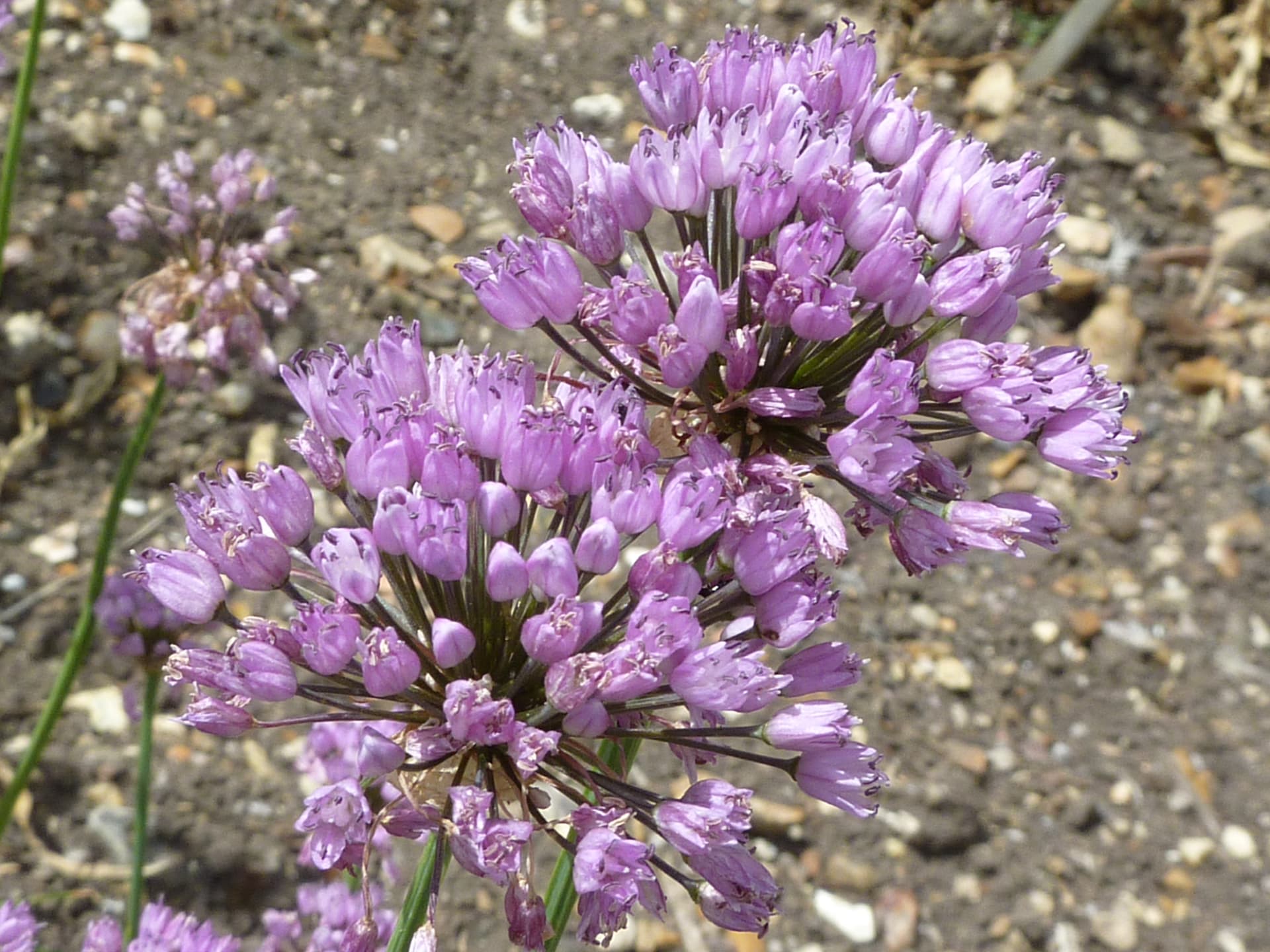
Native to the damp meadows of central Europe and Siberia, mouse garlic is a clump-forming ornamental onion with slender, grass-like foliage and airy, globe-shaped umbels of pale pink-to-lilac flowers that darken with age, blooming in mid to late summer above the foliage. Unlike most ornamental alliums, it genuinely tolerates - even prefers - the wet, heavy soil that causes bulb rot in drier-loving species.
Bees, butterflies, and other pollinators visit the flowers heavily. It's a good pick for a rain garden edge or any moist spot where standard drought-loving alliums would struggle.
White Rust
White, blister-like pustules on the undersides of leaves with yellow spots on the upper surface; severe infections distort leaves and stems.
Remove and destroy infected leaves, improve air circulation, avoid overhead watering, and rotate brassicas to a new bed each year.