
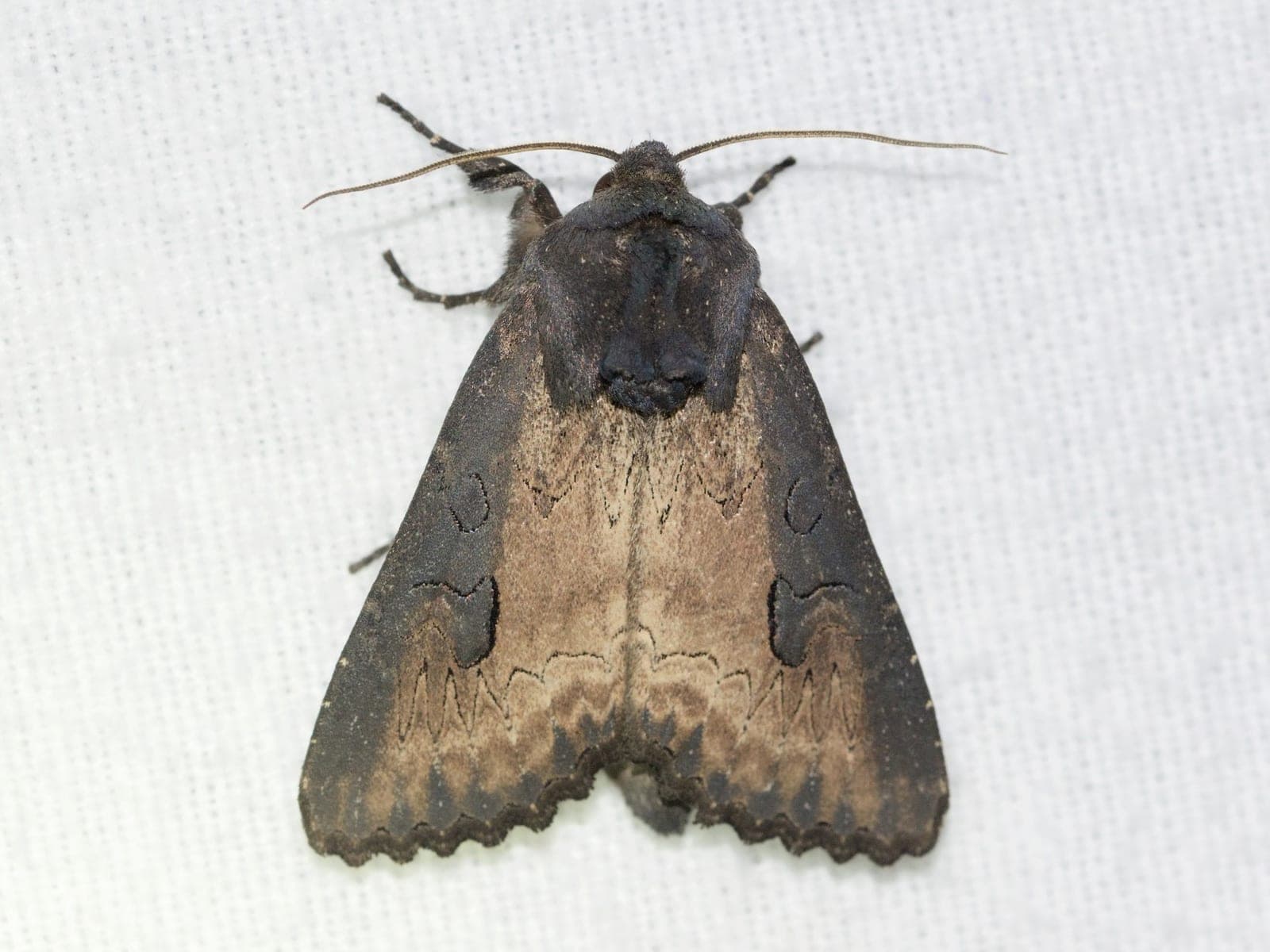
Iris Borer
The iris borer is the most damaging pest of bearded, Japanese, and Siberian iris in eastern North America. It is the larva of a noctuid moth that completes one generation per year, and a single infestation can wipe out an established iris planting within a season or two if left unmanaged.
Adult moths fly from late August through October and deposit eggs on dry iris foliage and nearby plant debris. The eggs overwinter and hatch in early spring as iris leaves begin to push up. Newly hatched larvae chew small notches along leaf margins before tunneling down into the leaf toward the base. By midsummer the larvae have bored deep into the rhizome, feeding on its interior. A mature larva is pinkish-white with a brown head and can exceed two inches in length. Rhizomes damaged this way are highly susceptible to bacterial soft rot caused by Erwinia carotovora, which is often more destructive than the borer itself. Larvae pupate in the soil in late summer.
Destructive boring pest whose larvae tunnel through iris leaves and into rhizomes, causing direct tissue loss and creating entry points for secondary bacterial infection.
Vertical streaks and notched, water-soaked edges on new leaves; pink caterpillars tunnel down into rhizomes, leaving them hollow and prone to rot.
Remove streaked leaves and crush larvae. Clean up all foliage and debris in fall to destroy eggs. Apply beneficial nematodes to soil in spring if infestations recur.