
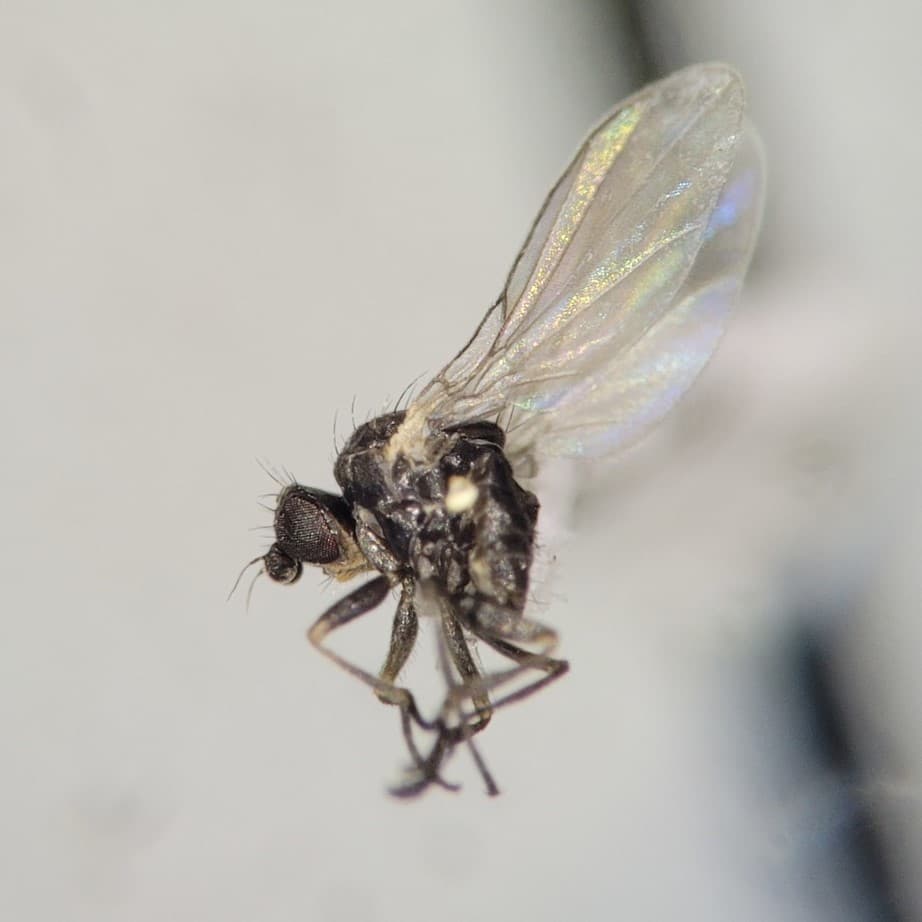
Columbine Leaf Miner
Columbine leaf miner is the larval stage of a small fly in the family Agromyzidae. It feeds exclusively on columbine (Aquilegia spp.), tunneling through leaf tissue and leaving behind winding, pale serpentine trails on the leaf surface. The damage is mostly cosmetic, but heavy infestations can diminish a planting's appearance and reduce photosynthesis when most of the canopy is affected.
Adult flies emerge in spring and lay eggs directly into columbine leaf tissue. Larvae hatch and mine between the upper and lower leaf layers, creating trails that widen as the larva grows. When mature, the larva drops to the soil to pupate. Two or more generations can occur per season in the Northeast, with the first flush of mines typically appearing in late spring shortly after new foliage expands.
Pest whose larvae mine the leaves of columbine (Aquilegia), causing cosmetic disfigurement and, in heavy infestations, a measurable reduction in photosynthetic capacity.
White or tan winding tunnels across the leaf surface, caused by larvae feeding inside the leaf tissue. Heavy infestations make foliage look blotched and dry.
Remove and destroy mined leaves as they appear. Cut the whole plant to its basal rosette after flowering to force clean new growth. Clear plant debris in fall to reduce overwintering pupae.