
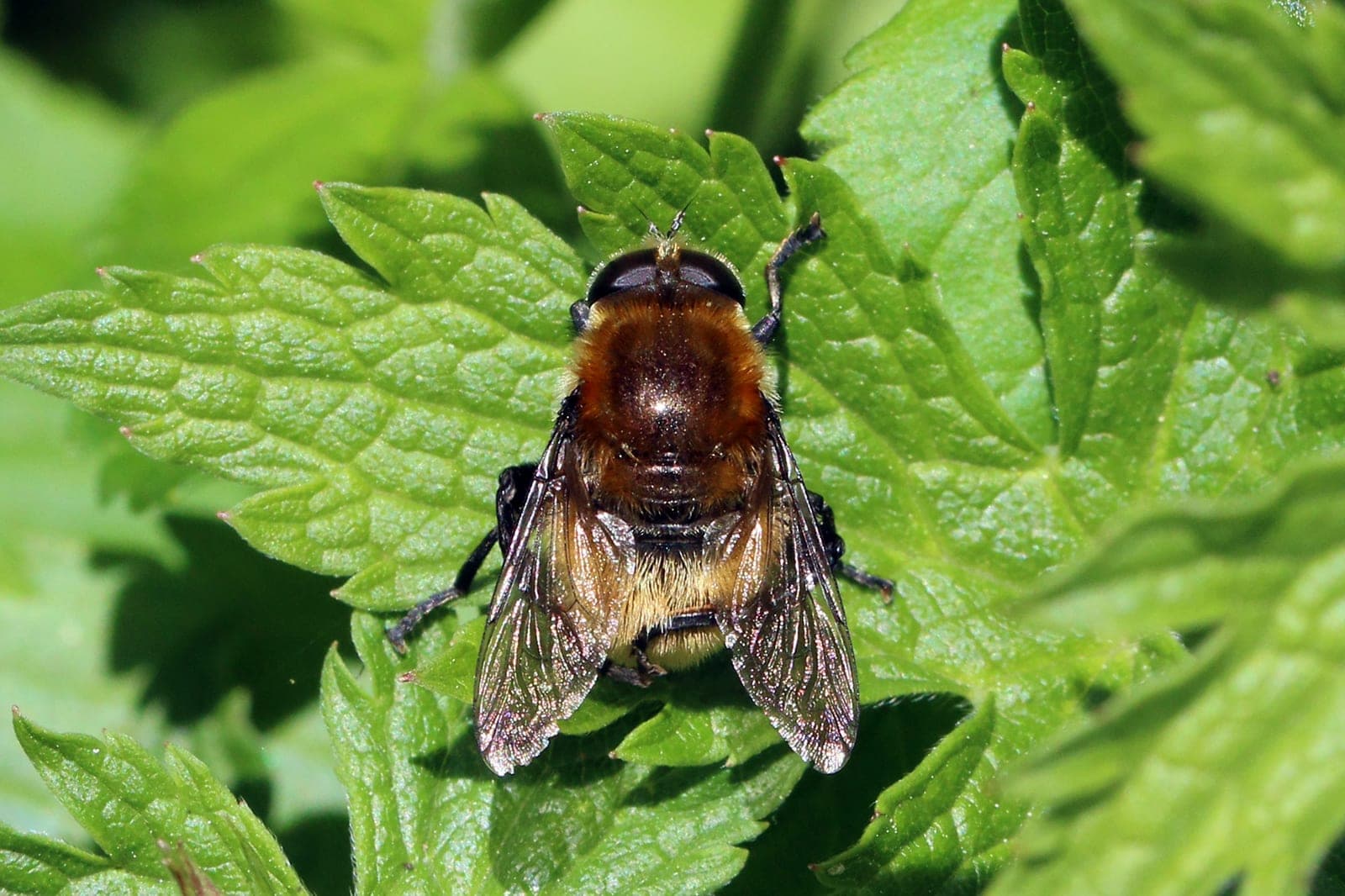
Narcissus Bulb Fly
The narcissus bulb fly is a hoverfly native to Europe that is now established across much of North America. The adult is harmless to people and plants alike, but the larval stage is another matter entirely. A single maggot can hollow out and destroy one bulb from the inside, and the damage often goes undetected until a plant fails to emerge or flowers the following season. Daffodils and narcissus are the primary targets, though infestations have been recorded in hyacinth, tulip, and onion.
Adults are on the wing from late spring into midsummer, timed to coincide with narcissus foliage. Females locate host bulbs by following the scent of wilting leaves and lay single eggs in the soil at the base of the plant or directly into the bulb neck. Larvae hatch and bore inward, feeding through summer and fall before overwintering inside the bulb. They pupate in the soil the following spring. An infested bulb typically feels soft or spongy when squeezed; it may push up weak, grasslike foliage but will rarely flower.
The adult fly is a textbook case of Batesian mimicry. Its coloration and flight pattern closely resemble a bumblebee, giving it protection it has not earned through any actual sting. Merodon equestris can be distinguished from other bumblebee-mimicking hoverflies by the pronounced triangular projection on the underside of its hind femora, a feature that requires a hand lens or close-up photograph to confirm.
Pest whose larvae tunnel into and destroy bulbs of narcissus, daffodil, and related Amaryllidaceae plants.
Stunted or absent growth in spring; soft, rotted bulbs with larvae tunneling through the interior. Affected plants produce weak, grassy foliage and few or no flowers.
Discard infested bulbs. Avoid leaving soft, exposed bulbs in soil. Firm soil around the neck of plants as foliage dies back to block egg-laying, and cultivate the surface to disrupt larvae.