
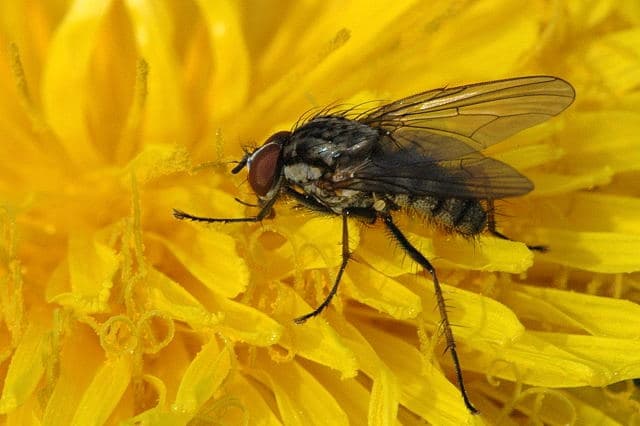
Cabbage Root Maggot
The cabbage root maggot is the larval stage of Delia radicum, a small grey fly roughly the size and shape of a common housefly. It is one of the most damaging pests of brassica crops in cool-climate gardens, targeting cabbage, broccoli, cauliflower, Brussels sprouts, kale, radishes, and turnips. A single generation can kill young transplants outright and significantly reduce the yield of established plants.
Adult flies emerge in spring as soil temperatures climb, typically around the time early brassicas are transplanted. Females lay eggs at the base of plant stems just at or below the soil surface. Larvae hatch within a week and begin feeding on the root system, tunneling through fine roots and burrowing into larger taproots and fleshy storage roots. Above ground, affected plants wilt during the day, show yellowing leaves, and grow slowly. In upstate New York, two to three generations develop between early spring and fall, meaning pressure continues well into the growing season.
Crop rotation is one of the most effective long-term management tools because the pupae overwinter in soil and adults emerge near where host plants grew the previous year. Moving brassicas to a new bed each season disrupts this cycle and reduces local populations over time.
Destructive pest whose larvae feed on and destroy the roots of brassica family vegetables.
Seedlings wilt suddenly despite adequate moisture. Roots show surface scarring and interior tunneling from small, creamy-white larvae feeding at and just below the soil line. Young transplants may collapse and die; older plants produce stunted, loose heads.
Apply floating row cover immediately after transplanting to prevent adult flies from laying eggs at the soil line. Drench soil with beneficial nematodes (Steinernema feltiae) before planting. Remove and dispose of infested plants and surrounding soil. Rotate all brassicas to a new bed each season.