
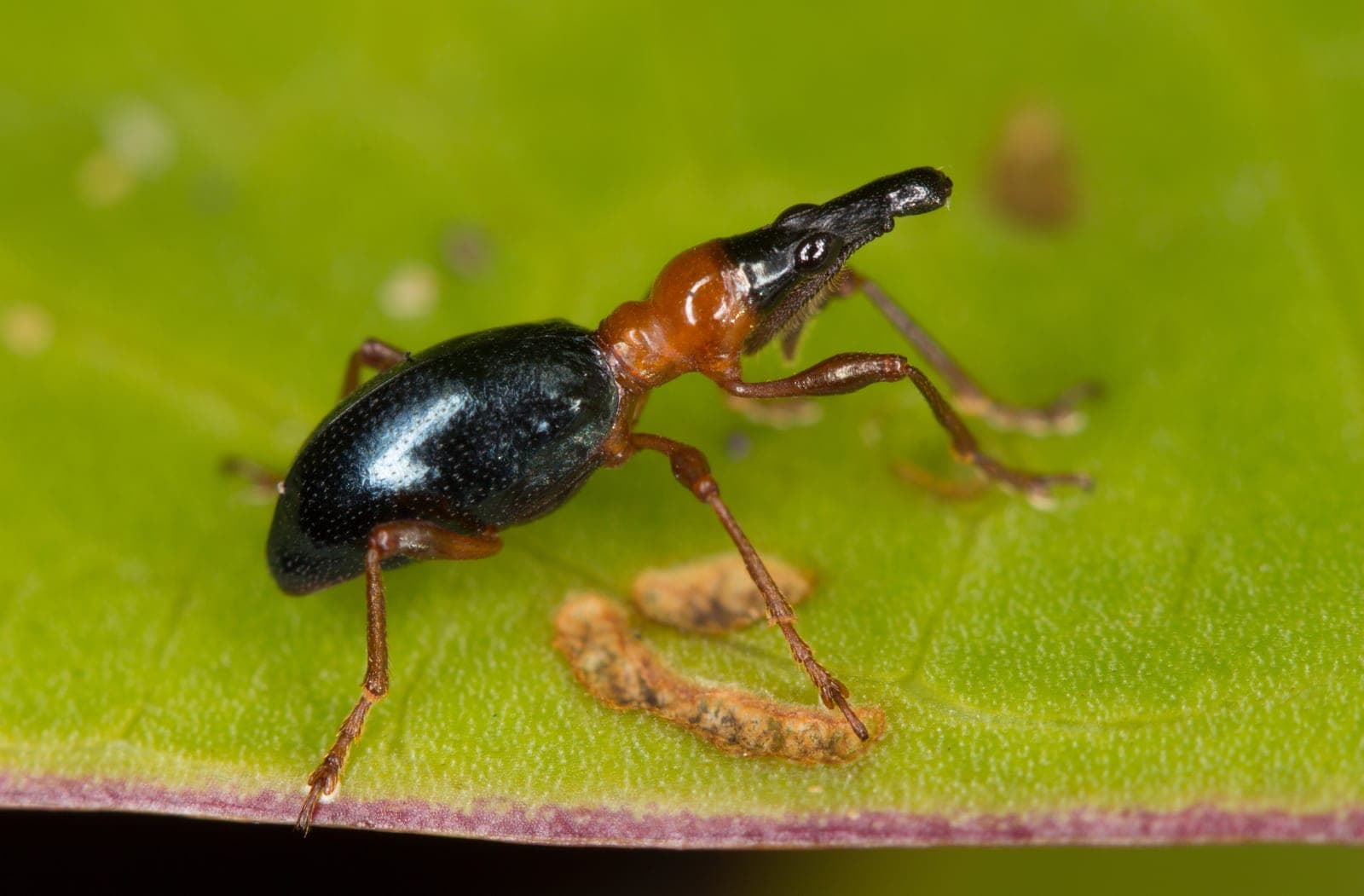
Sweet Potato Weevil
The sweet potato weevil is among the most destructive insect pests of sweet potatoes worldwide. Adults are small and ant-like, with a reddish-orange head and thorax, dark blue-black wing covers, and a narrow constricted waist. Though it cannot survive winter outdoors in Zone 6b, it reaches northern gardens through infested slips or transplants, which makes sourcing clean planting material the single most important preventive measure a gardener can take.
Larvae cause the bulk of the damage by tunneling through roots and tubers from the moment they hatch. As they feed, the plant responds by producing terpenoid compounds, including ipomamarone, that make the flesh bitter and inedible even when the tuber looks intact from the outside. Adults feed on leaves, vines, and tuber surfaces, and females lay eggs inside small slits they chew into stems and roots at the soil line. Under warm conditions the full life cycle can complete in under 30 days, allowing populations to build rapidly through a growing season.
The sweet potato weevil is a regulated quarantine pest in several U.S. states because of its capacity to devastate both commercial and home crops. Gardeners who source slips from southern suppliers or through informal plant exchanges carry a real risk of introducing it to a previously clean site.
A serious pest of sweet potatoes, damaging tubers through larval tunneling and triggering chemical changes that make the flesh inedible.
Small puncture holes and tunneling in stems, roots, and tubers. Infested tubers emit a sharp, bitter odor and the flesh may turn dark. Adults are ant-like with a blue-black body and reddish-orange legs.
Source only certified slip material. Harvest promptly before first frost. Destroy all crop debris after harvest. Rotate to non-host crops for 2+ years in heavily infested sites. Do not plant near other Ipomoea species.