
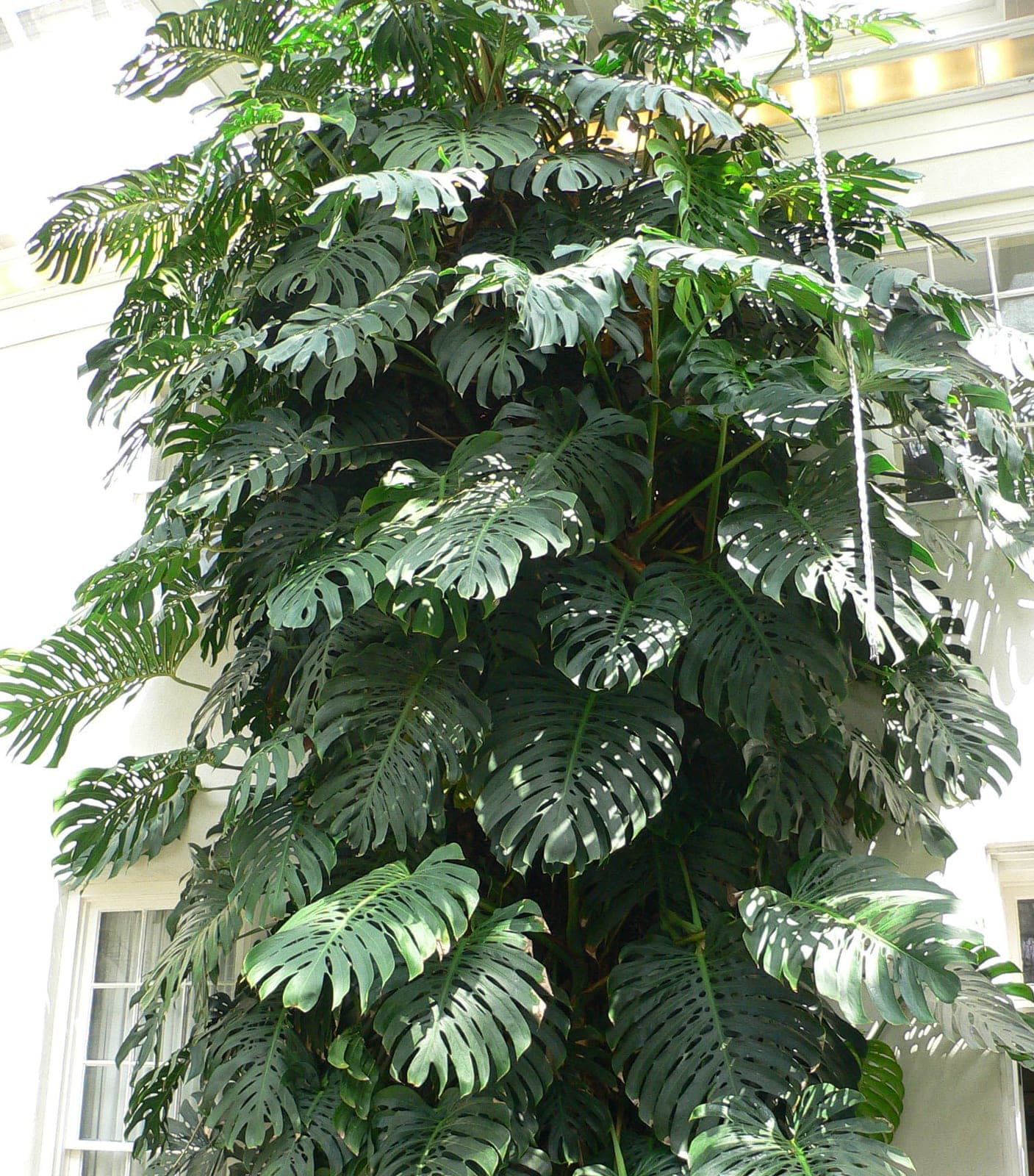
Monstera deliciosa earned its nickname - the Swiss cheese plant - from the dramatic holes and splits that develop in mature leaves. Those fenestrations only come with good light and age, so a young plant in a dim corner gives you plain heart-shaped leaves and a lot of impatience.
It's a climber, not a trailer: in the wild it scrambles up trees, and indoors a moss pole gives the aerial roots something to grab, which in turn pushes bigger, more split leaves. Easy to grow, fast in summer, and forgiving of the odd missed watering - just don't let it sit in a wet saucer.
Bright indirect light produces the big fenestrated leaves; low light gives small, hole-less foliage.
Water when the top 1–2 inches of soil are dry
Feed with a balanced houseplant fertiliser
Wipe the big leaves so they can photosynthesise
Guide aerial roots onto a moss pole for bigger, split leaves
Repot up a size when roots fill the pot