
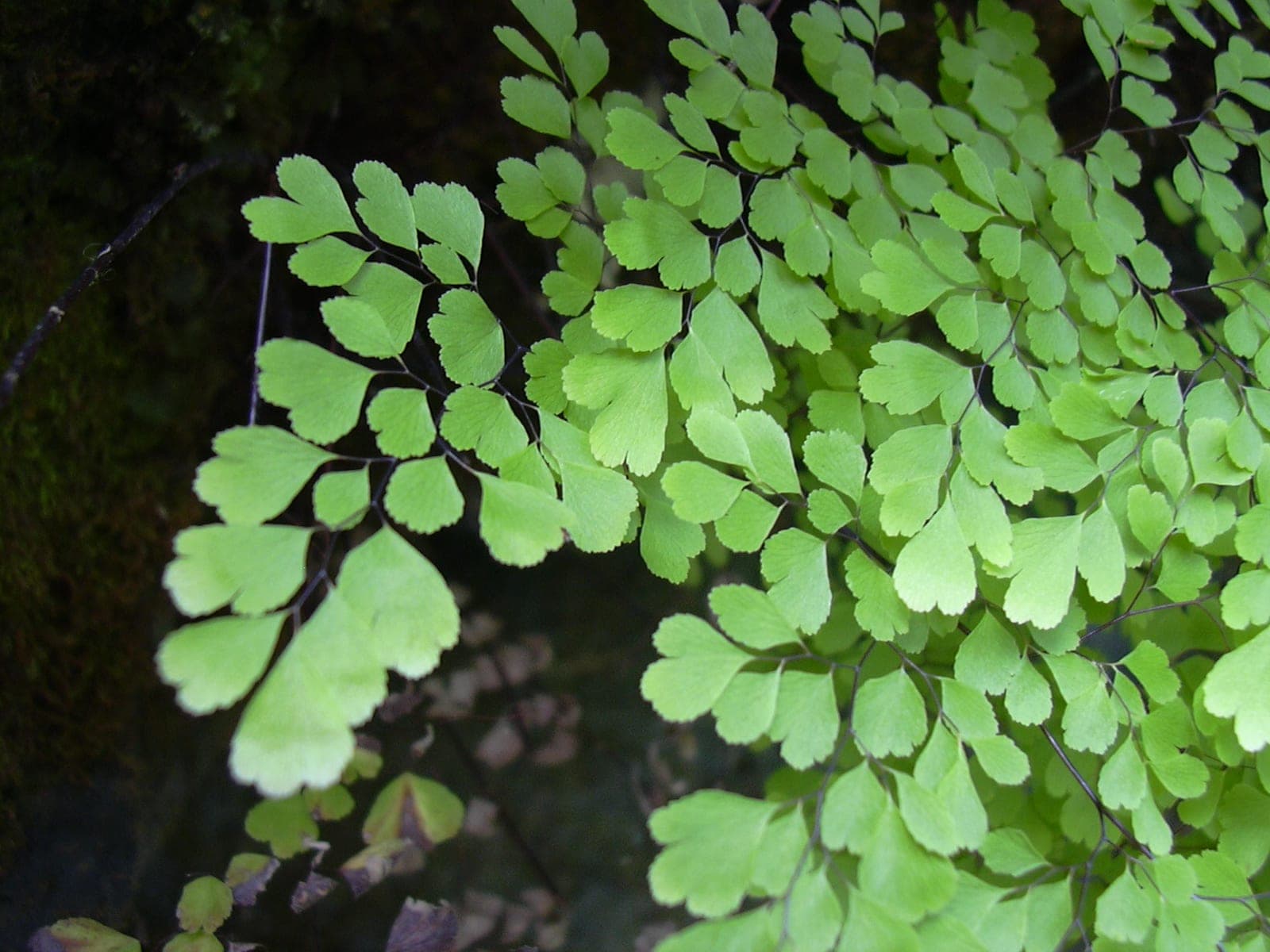
The maidenhair fern is the diva of this list - gossamer-fine fronds on wiry black stems, beautiful enough to be worth the trouble, and utterly unforgiving of a single dry-out. Let the soil go dry even once and whole fronds crisp up and die back, sometimes for good.
The trick is relentless consistency: constantly moist soil, high humidity, and gentle indirect light. It's happiest in a bathroom, a terrarium, or under a cloche where the air stays damp. If it crisps despite your efforts, cut everything back to the soil and keep it moist - it will often push fresh fronds. Not a plant for the forgetful, but few are prettier.
Medium, bright indirect light only; the delicate fronds scorch in any direct sun.
Keep the soil constantly moist - never let it dry
Maintain high humidity with a tray, cloche, or grouping
Feed with a very dilute balanced fertiliser
If fronds crisp, cut back to the soil to force fresh growth
Maidenhair Fern sets spores, not seed.
Slower than seed, and it asks for cleanliness rather than skill. The payoff is numbers - one ripe frond carries more spores than you could ever use. Timings below are estimated for zone 6B.
- 1
Wait for the sori to darken
0–10 weeks before first frost≈ Aug 23 – Nov 1 for youDo this now
Turn a frond over. The spore cases sit in rows along the underside and ripen from pale green through rust to near-black. Green is too early. Once they look dusty and shed at a touch, they are ready - a day either side matters more than the month, and species vary by weeks.
- 2
Collect onto paper
0–10 weeks before first frost≈ Aug 23 – Nov 1 for youDo this now
Cut a ripe frond and lay it face down on white paper somewhere still, out of any draught. Leave it overnight. You want the fine brown dust underneath, not the chaff - tip the sheet and the spores stay put while the debris slides off. Fold them into a paper envelope, cool and dry.
- 3
Sterilise the medium
Any time before sowing
Spores are slow and defenceless, and anything else in the pot will outrun them. Use a soilless mix, peat or coir with perlite, and bake it at 180F for half an hour. Cool it, then moisten. This is the step people skip and the reason most attempts end in mould.
- 4
Surface sow, and give them light
Sow within a few months of collecting
Scatter thinly across the damp surface and leave them uncovered - spores need light to germinate, so burying them ends it. Cover the container to hold humidity and keep it in bright indirect light at 65 to 75F. Mist rather than water.
- 5
Green film first, fronds much later
2 to 4 weeks after sowing
A green film spreads across the surface. That is not a fern yet - it is the prothallus, the gametophyte generation, carrying both sets of organs. Fertilisation needs a film of water for the sperm to swim through, so the surface has to stay damp through this stage or nothing crosses.
- 6
Prick out at an inch
Roughly 2 to 4 months after sowing
True fronds push up through the green mat. When a clump reaches about an inch, lift it with a fork into its own small pot. Hold the humidity another month, then open the cover a little at a time - dry air kills more sporelings than anything else.
- 7
Move them outside
2–8 weeks after last frost≈ Apr 24 – Jun 5 for you
Into shade and damp ground once several true fronds are up. A first-year sporeling is small enough to lose under a leaf, so give it somewhere you will remember to look.
Sporelings resent drying out far more than being crowded. When in doubt, leave the cover on longer.