
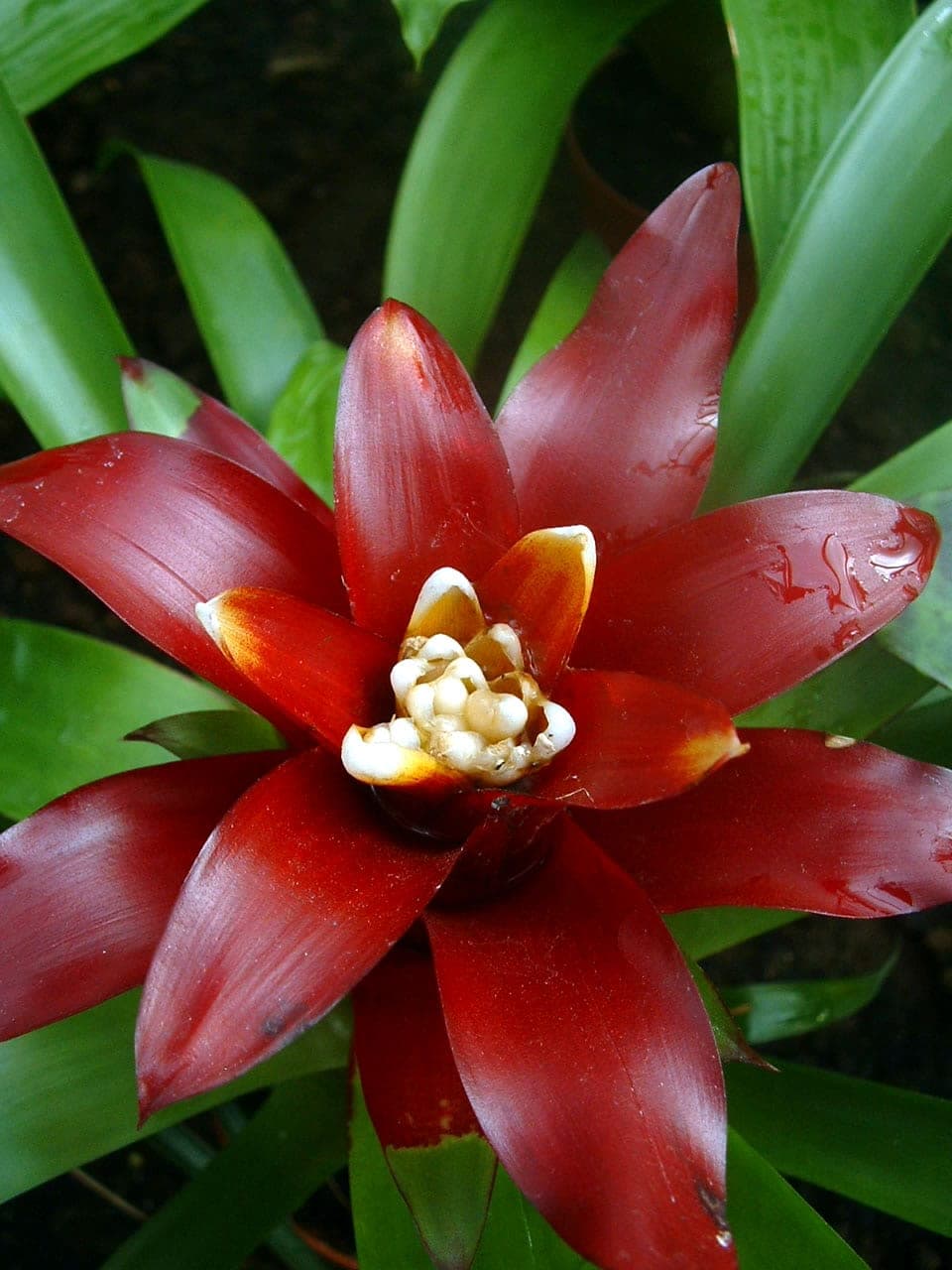
Bromeliad
To encourage bloom: A mature rosette flowers once; a ripe apple sealed in a clear bag with the plant for a week or two encourages a stubborn one to bloom.
The coloured bract lasts for months; afterwards the rosette slowly dies while pups form at its base.
Bromeliads bring an astonishing, long-lasting flush of colour - the brilliant red, pink, or orange you see is actually a bract, the true flowers tucked at its centre, and it can hold its colour for months. Many are epiphytes that gather water in a central cup (the tank) rather than mainly through their roots.
That changes how you water: keep the central cup topped up with water, flush it out monthly so it doesn't stagnate, and water the soil only lightly. After the parent plant flowers it slowly dies, but it produces pups around the base that you can separate and grow on. Bright indirect light and humidity keep them at their best.
Bright indirect light keeps the colourful bracts vivid; harsh direct sun bleaches them.
Keep the central cup topped up; water the soil lightly
Flush and refill the central cup so it doesn't stagnate
Expect the parent to die after flowering - keep the pups
Feed sparingly with a dilute fertiliser