
 Batten Blooms
Growing orchids indoors
Orchids have a reputation for fussiness that mostly comes down to one habit: treating them like a regular houseplant. They don’t grow in soil, don’t want a sip on a schedule, and several need a genuine seasonal rest to flower again. Here are the eight types worth knowing - five popular, three for anyone ready to go further - the light and water rhythm each wants, the growing rules that hold across almost all of them, and how to catch trouble early.
Light, water, feed, rest
Unlike the outdoor guides, orchid care doesn’t run on frost dates - it runs on a recurring rhythm you repeat indoors year after year. Get these four right and almost every popular orchid reblooms.
Light, year-round
Almost every orchid problem traces back to light. Too little and it never reblooms; too much and the leaves bleach or scorch. Bright, indirect light - an east window, or a few feet back from a south or west one - suits most of the popular types. Leaf color is the tell: mid grass-green is right, dark green means too little light, reddish or yellow means too much.
Water, by the roots
Bark-grown orchids (Phalaenopsis, Dendrobium, Cattleya, Oncidium, Bulbophyllum) want to approach dryness between waterings, then a thorough soak-and-drain - never a sip on a schedule, and never left sitting in a decorative pot with no drainage. Terrestrial and cool-growing types (Jewel Orchid, Masdevallia) want the opposite: kept lightly and evenly moist at all times.
Feed, weakly and weekly
Orchid bark holds almost no nutrients on its own, so feeding matters more than it does for a plant in soil. A dilute, balanced orchid fertilizer every one to two weeks through the growing season - spring into early fall - covers the popular types; ease off or stop through the winter rest.
Rest, to force the bloom
A number of orchids need a deliberate rest to flower again, not just steady care. Dendrobium and Cymbidium in particular want cooler nights, less water, and a touch less light for several weeks - skip that dip and you get healthy leaves and no flowers.
The types, popular and obscure
Every orchid genus is a variation on the same handful of questions - how much light, how it wants to dry out, and whether it needs a deliberate rest to flower again. The five popular types below cover almost every orchid sold at a garden center; the three obscure ones are worth seeking out once you’ve got the basics down.
Popular
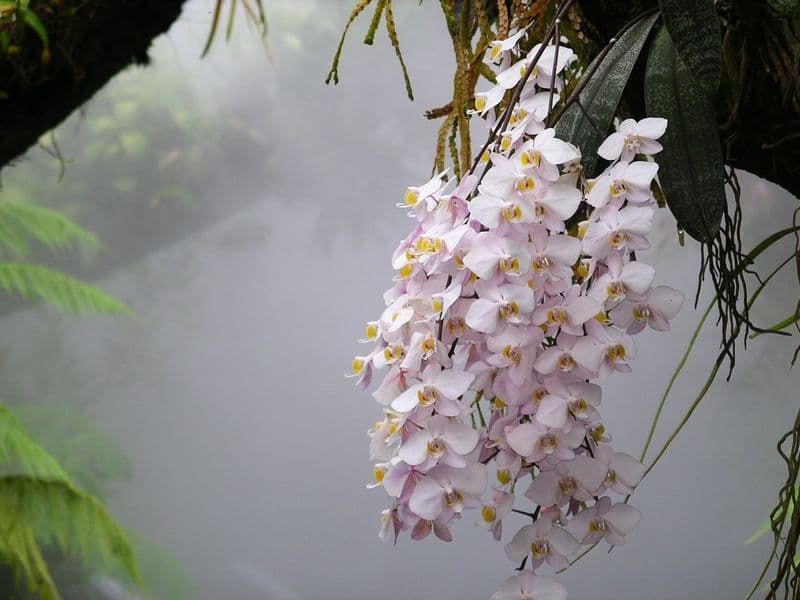
Moth Orchid
Phalaenopsis spp.
Light
Bright indirect - an east window, no direct midday sun
Water
Soak the bark and drain fully, roughly weekly, when roots turn silvery
The supermarket orchid everyone owns. Grows on bark, not soil, and blooms for months. The most forgiving of the popular five - start here.
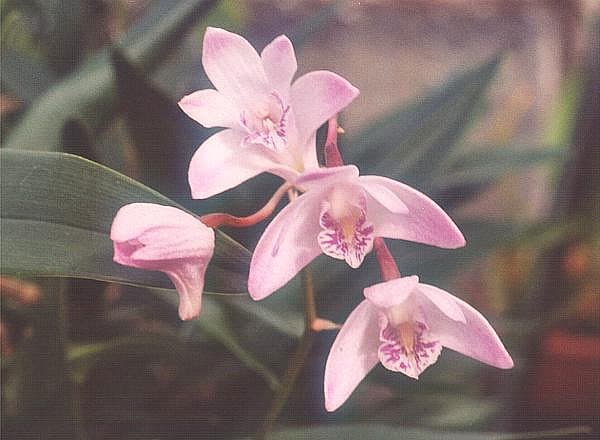
Dendrobium Orchid
Dendrobium spp.
Light
Bright indirect, more than a moth orchid wants - an unobstructed east or shaded south window
Water
Water thoroughly, then let the bark approach dryness; ease off sharply in winter
Blooms from tall canes, and a genuine winter rest - cooler, drier, slightly less light - is what actually triggers the next flush of flowers.
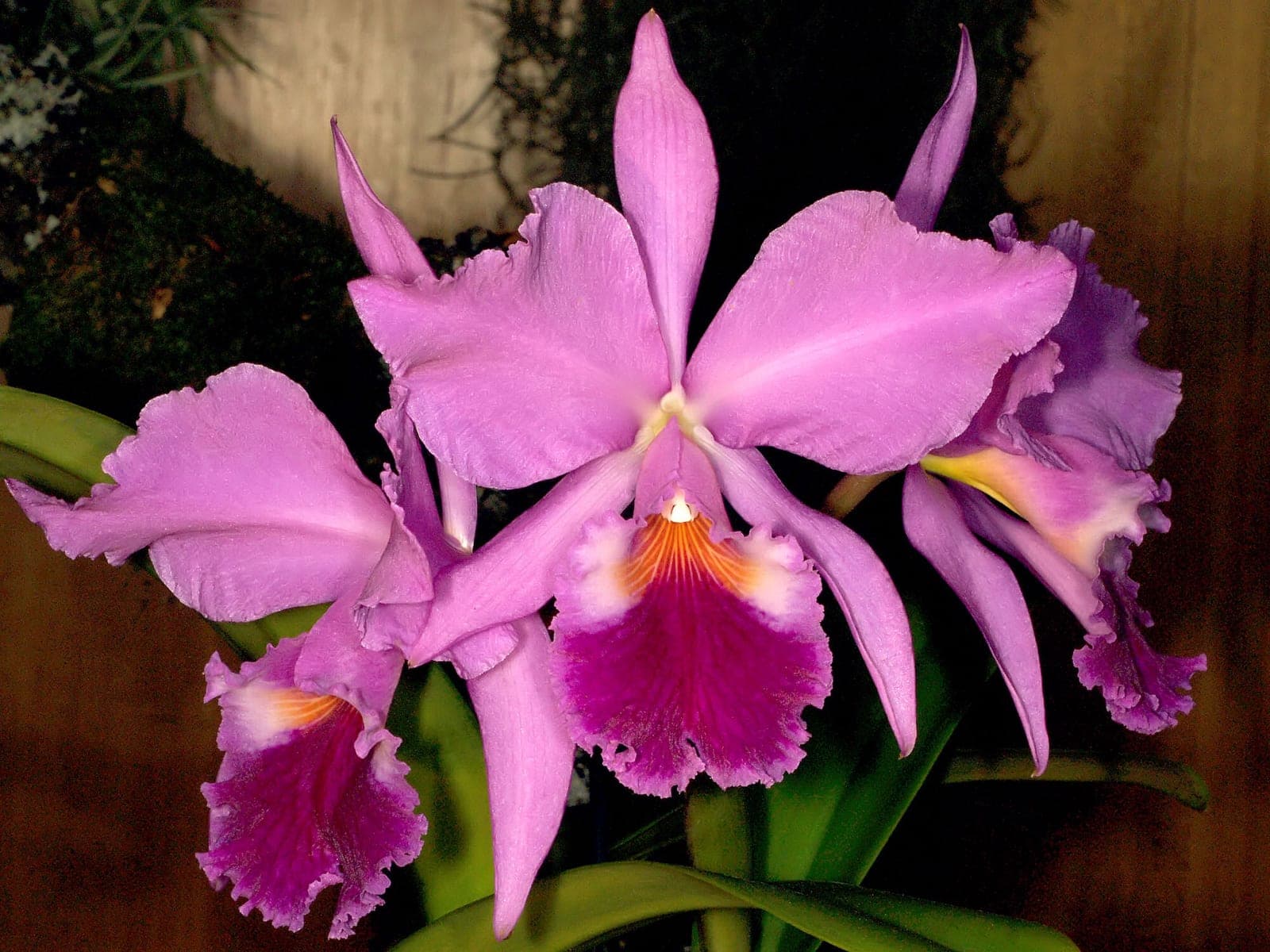
Cattleya Orchid
Cattleya spp.
Light
The brightest of the common orchids - an unfiltered south or west window
Water
Water thoroughly, then let the bark dry almost completely between waterings
The classic large, fragrant corsage orchid. Its pseudobulbs store water, so the roots rot fast if kept wet - err dry, not damp.
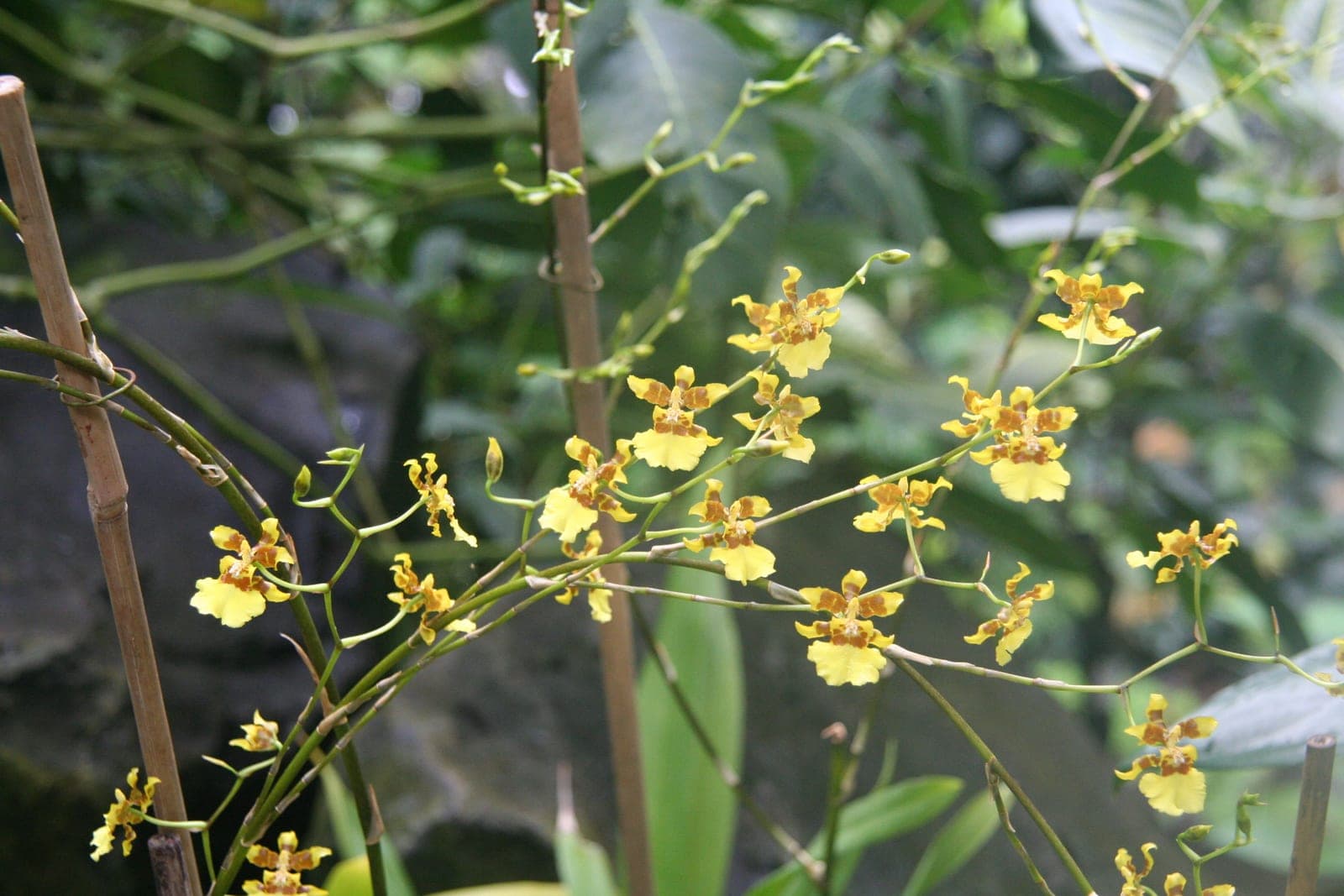
Oncidium Orchid
Oncidium spp.
Light
Bright indirect, similar to a moth orchid
Water
Keep lightly moist through the growing season - its roots are finer than other orchids and dry out fast
The dancing-lady orchid, named for its flower shape, throws branching sprays of dozens of small blooms instead of a few large ones.
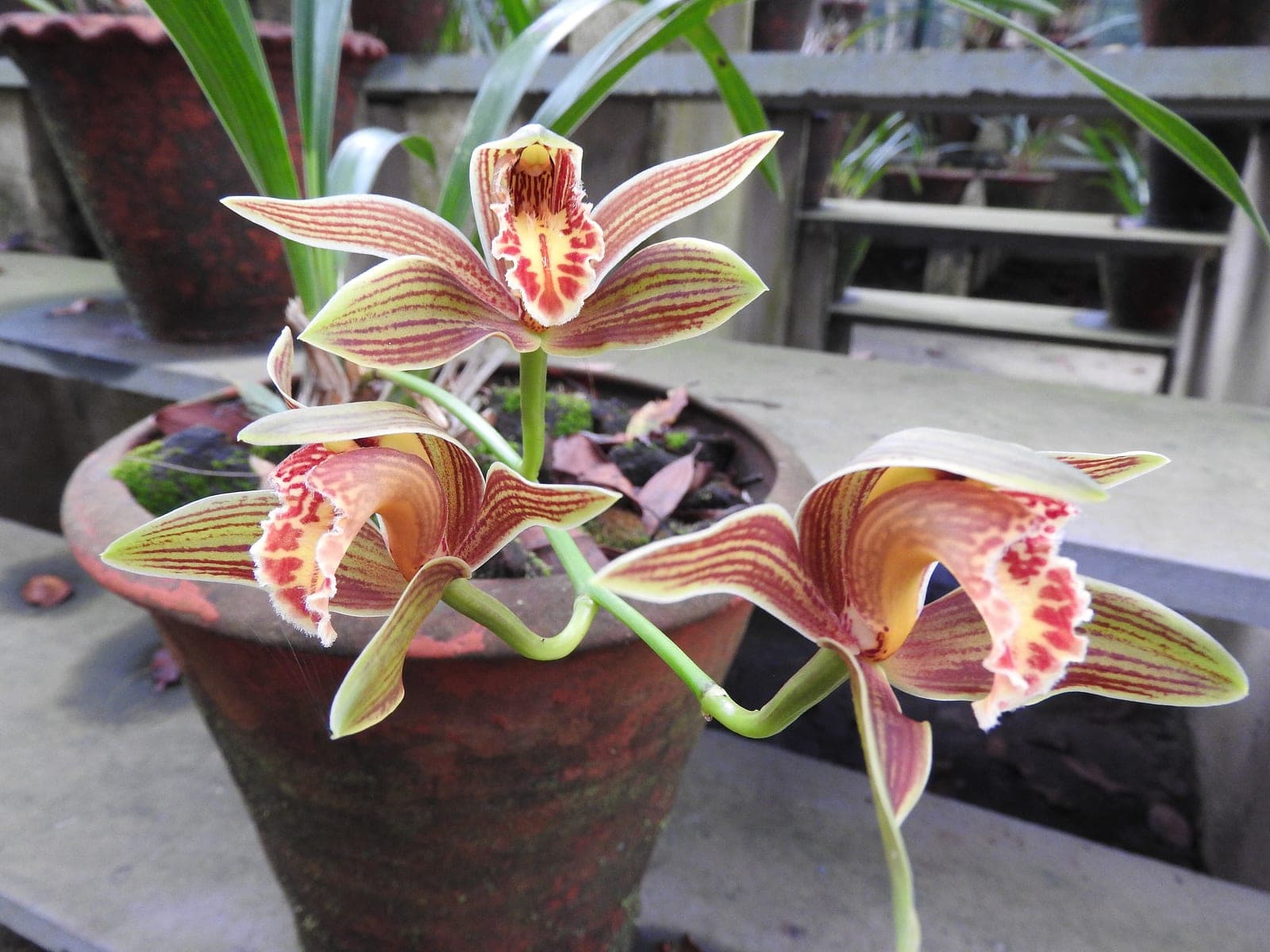
Cymbidium Orchid
Cymbidium spp.
Light
Bright indirect to direct morning sun - the most light-hungry of the common orchids
Water
Keep evenly moist through the growing season, easing back in winter
Wants a genuine cold snap in fall, down toward 50°F at night, to set its flower spike - the one common orchid that often prefers a summer outdoors.
Obscure
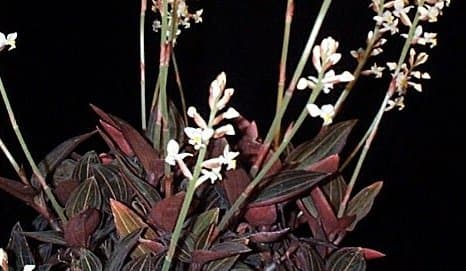
Jewel Orchid
Ludisia discolor
Light
Low to medium - the rare orchid that scorches in bright light
Water
Keep lightly and evenly moist; it's planted in real potting mix, not bark
Grown for its velvety, silver-veined leaves rather than its modest white flower spikes. Terrestrial, not epiphytic, and arguably the easiest orchid there is.
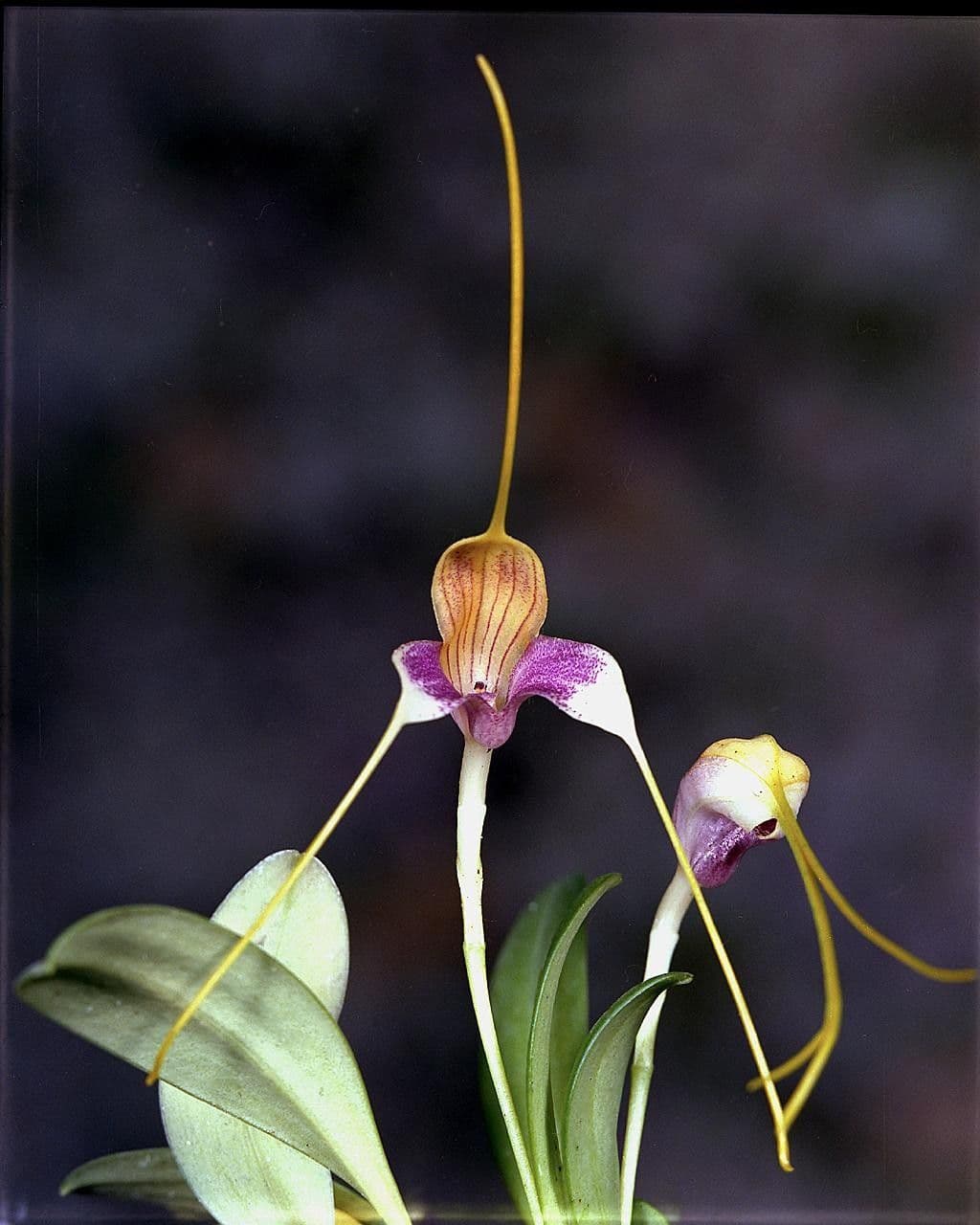
Masdevallia Orchid
Masdevallia spp.
Light
Medium, shaded - direct sun and warm rooms stall it out
Water
Keep constantly and evenly moist; it has no pseudobulbs to fall back on if it dries out
Cool-growing kite-shaped flowers on a plant with no water-storing pseudobulbs, so it's unforgiving of a normal heated summer room. A collector's orchid.
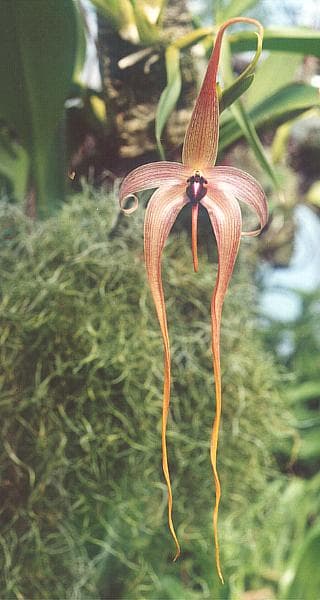
Bulbophyllum Orchid
Bulbophyllum spp.
Light
Bright indirect, similar to a moth orchid
Water
Water thoroughly, then let approach dryness between waterings; mounted specimens dry out faster and need more frequent misting
The largest orchid genus, wildly varied in flower form, spreading via a creeping rhizome - often grown mounted rather than potted. A few species smell of carrion to draw fly pollinators.
How to grow them
Different genera want different light and water rhythms, but the mechanics underneath - medium, humidity, root health - are nearly universal across the whole orchid family.
Never pot in ordinary soil
Most orchids are epiphytes - in the wild they grow on tree bark, not in the ground - so their roots need to breathe. Coarse bark, sphagnum moss, or a bark-and-perlite mix in a pot with real drainage holes is the rule; regular potting soil suffocates the roots within weeks.
Humidity over misting
Most orchids want 50 to 70 percent humidity, well above a typical home. A pebble tray, humidifier, or grouping plants together does more than misting the leaves, which dries fast and does little for the roots that actually need it.
Green roots, not gray or mushy
Healthy orchid roots are firm and silvery-green when dry, bright green when wet. Soft, hollow, or brown roots mean rot from staying too wet - the single most common way an orchid dies, almost always from care, not neglect.
Cut spent spikes with intent
On a Phalaenopsis, cutting the spent flower spike back to a lower node often triggers a rebloom from that same spike. On canes and pseudobulb orchids (Dendrobium, Cattleya, Oncidium, Cymbidium), leave the old growth in place - it can flower again in future years and stores energy for the plant even after its own bloom is done.
Repot on a cycle, not a whim
Bark breaks down and stops draining well after one to two years, which is reason enough to repot even a plant that looks fine. Do it right after flowering, size up only slightly, and use fresh bark rather than reusing the old.
Pests and problems
Most orchid trouble is a handful of repeat offenders - a few sap-sucking pests, and rot from staying too wet. Catch the tell early and nearly all of it is recoverable. For the full picture on any pest, see the garden insect field guide.
Mealybugs
The tell
White, cottony clusters in leaf joints and along flower spikes.
What to do
Dab each cluster with a cotton swab dipped in rubbing alcohol, then treat the whole plant with insecticidal soap and repeat weekly until they're gone.
Scale
The tell
Small, waxy brown bumps on leaves and stems that don't wipe off easily.
What to do
Scrape off what you can, then treat with horticultural oil or insecticidal soap, covering the undersides of leaves where they cluster.
Spider mites
The tell
Fine webbing and stippled, pale speckling on the leaves, usually in dry indoor air.
What to do
Raise the humidity, rinse the leaves under lukewarm water, and treat with insecticidal soap if the speckling keeps spreading.
Root and crown rot
The tell
Mushy, brown, or hollow roots, or a yellowing, collapsing base of the plant.
What to do
Unpot, cut away every soft or brown root with a sterile blade, let the plant dry out, and repot into fresh bark - a plant with any firm roots left can usually recover.
Bud blast
The tell
Flower buds yellow and drop before ever opening.
What to do
Almost always a sudden change - cold drafts, a move, dry air, or a gas heater nearby. Keep the plant somewhere stable once it's budding and avoid moving it.
See the full Indoor Plant Guide.
Every orchid on this page has its own catalog entry with the full care profile - light, water, humidity, toxicity, and a task list - alongside every other houseplant in the guide.
Looking for something?
Let us know and we will add it to the list for your garden plan.