Yareta
High in the Andes there are bright green boulders that give slightly when you press them.
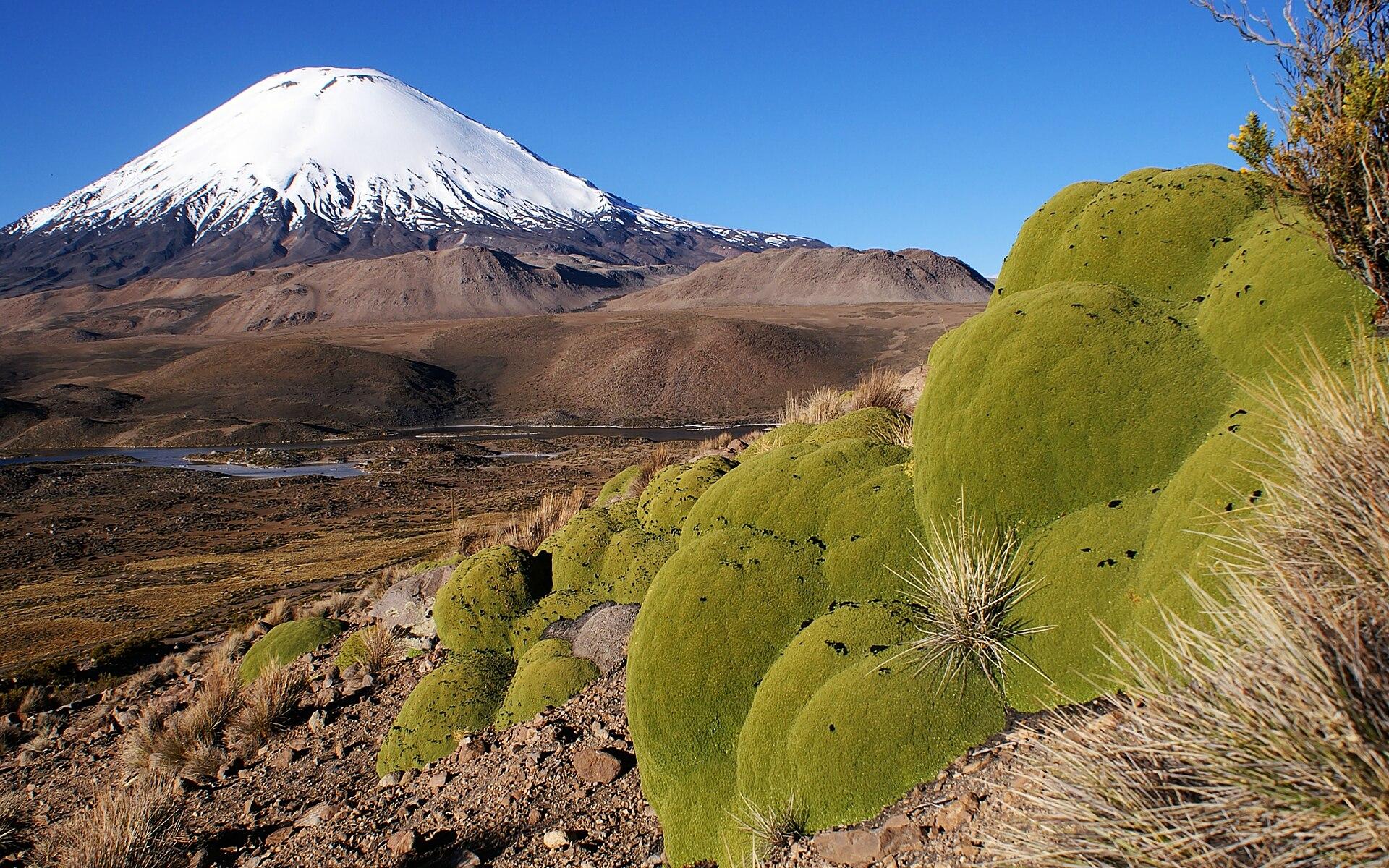
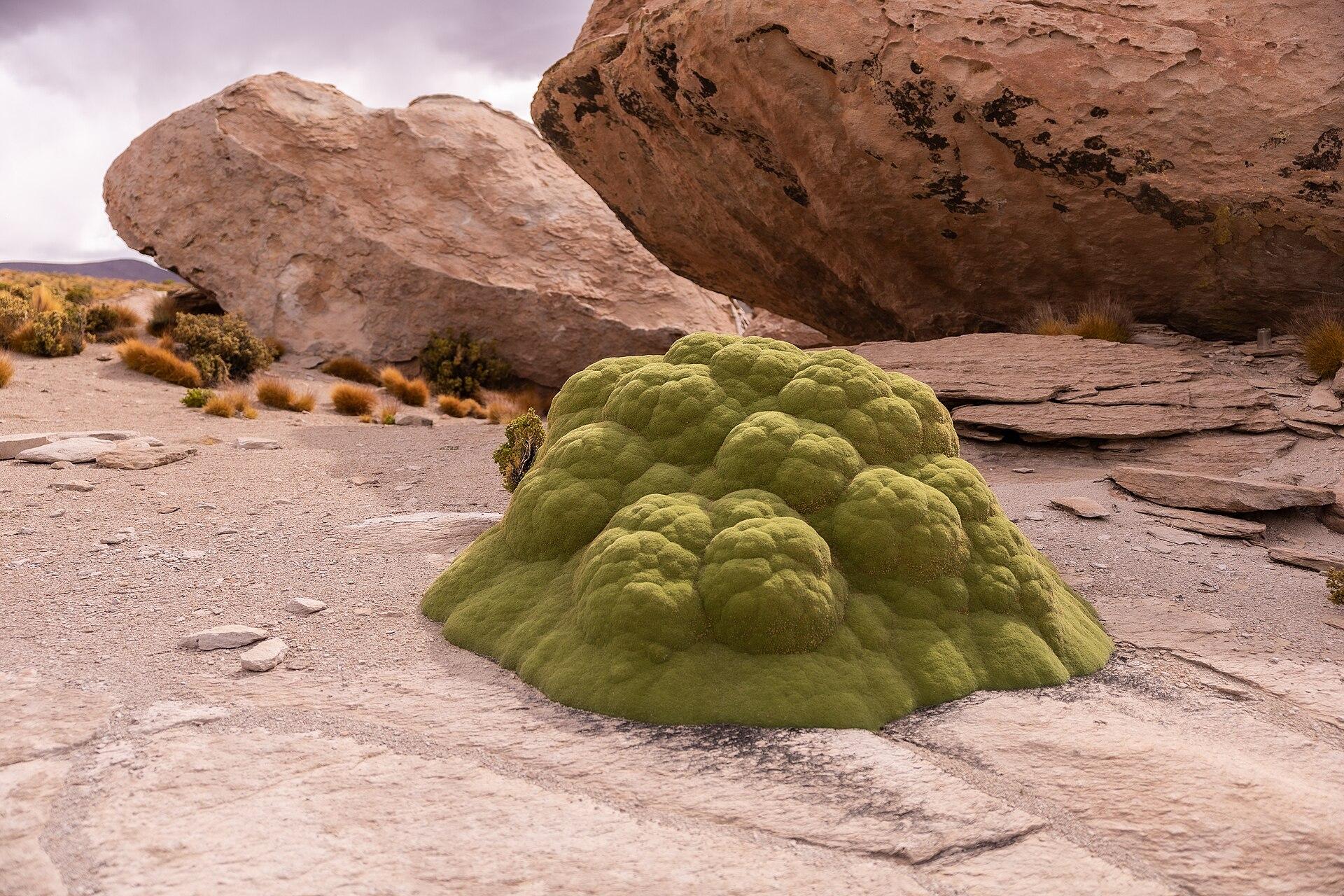
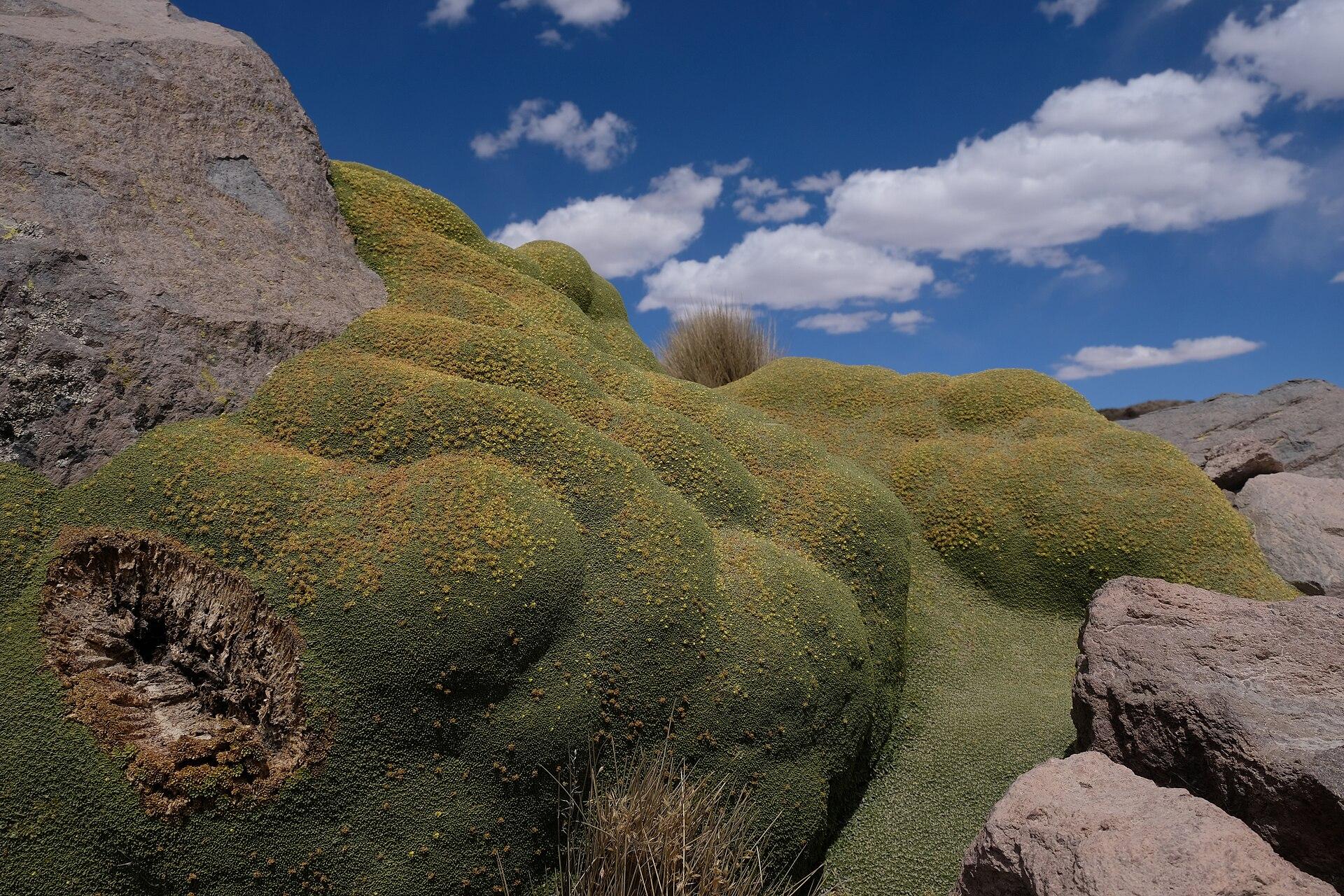
On the Puna grasslands of the Andes, between about 3,200 and 5,250 metres, the slopes are scattered with bright green boulders. Press one and it gives a little, like a firm pillow, and smells faintly of resin. This is yareta, Azorella compacta. It is not a moss or a lichen but a flowering plant in the carrot family, a relative of parsley and fennel.
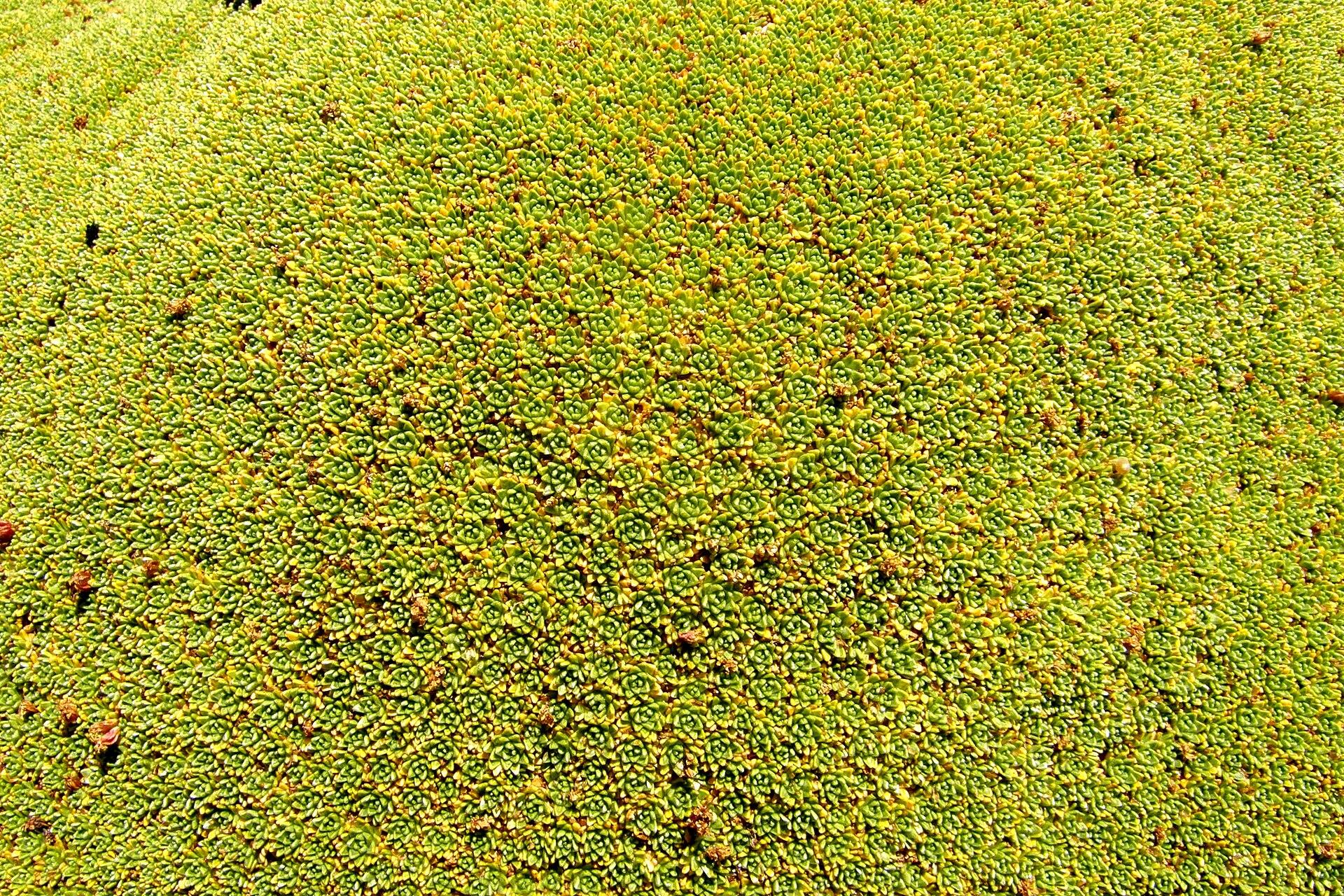
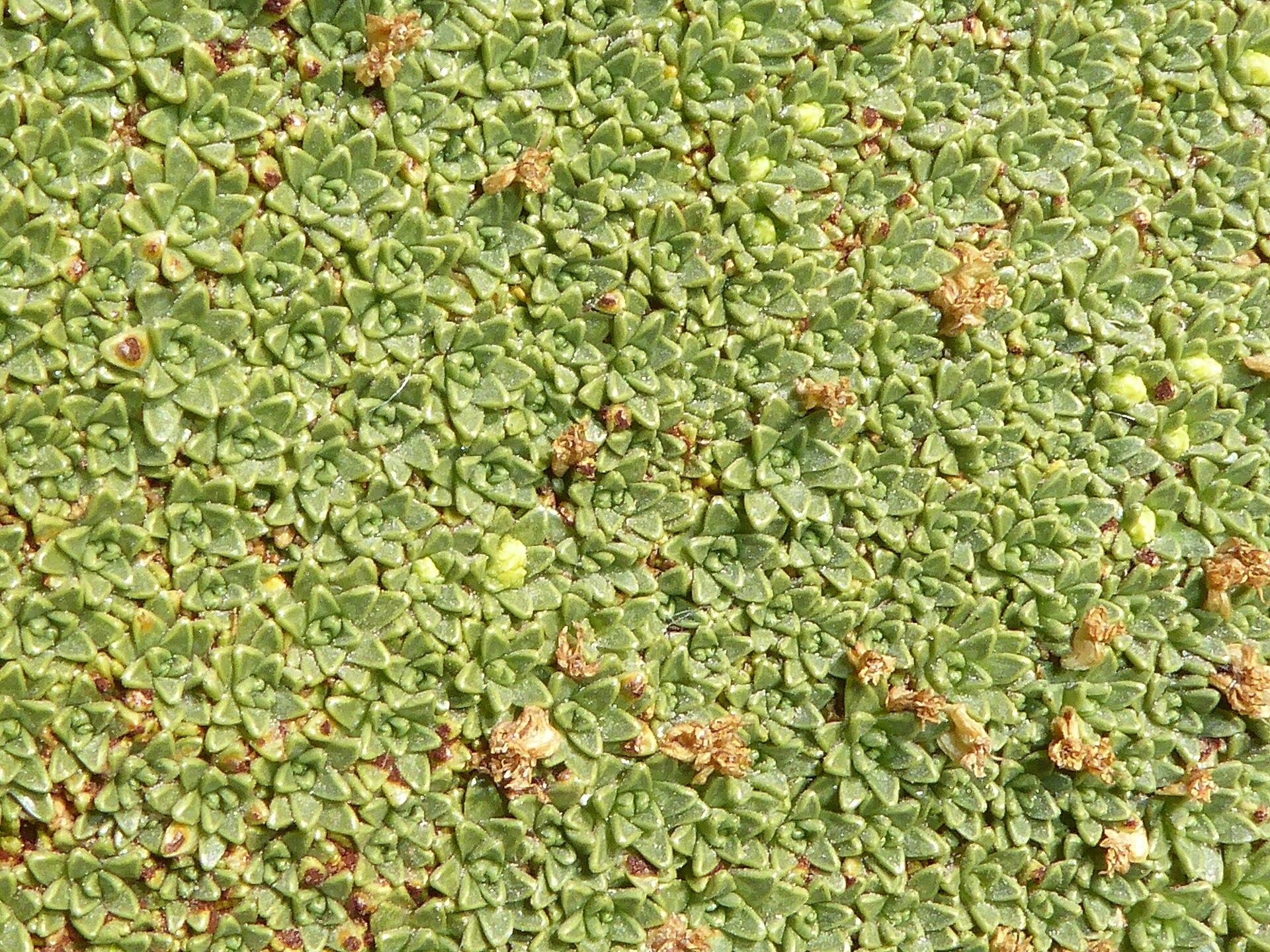
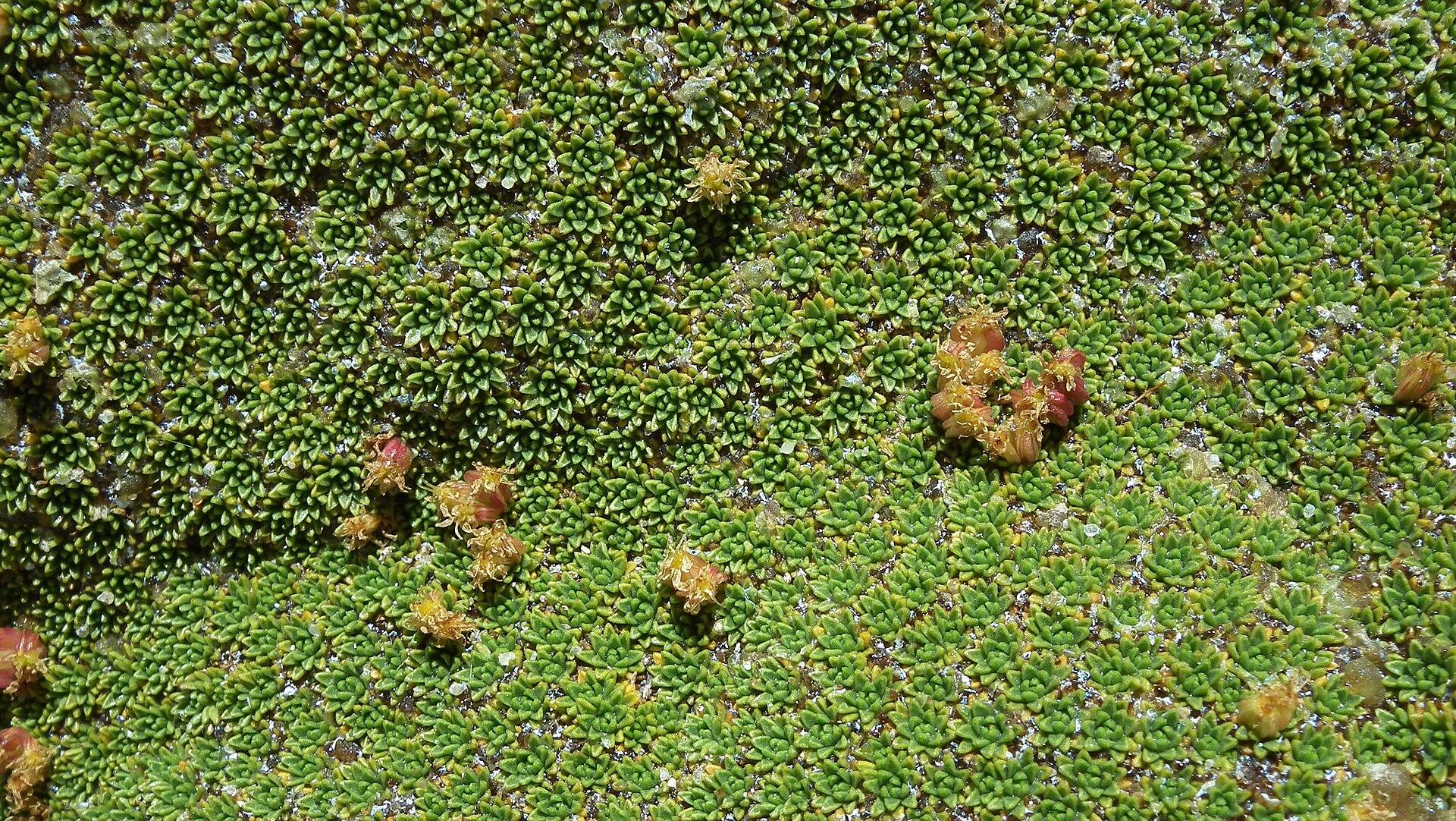
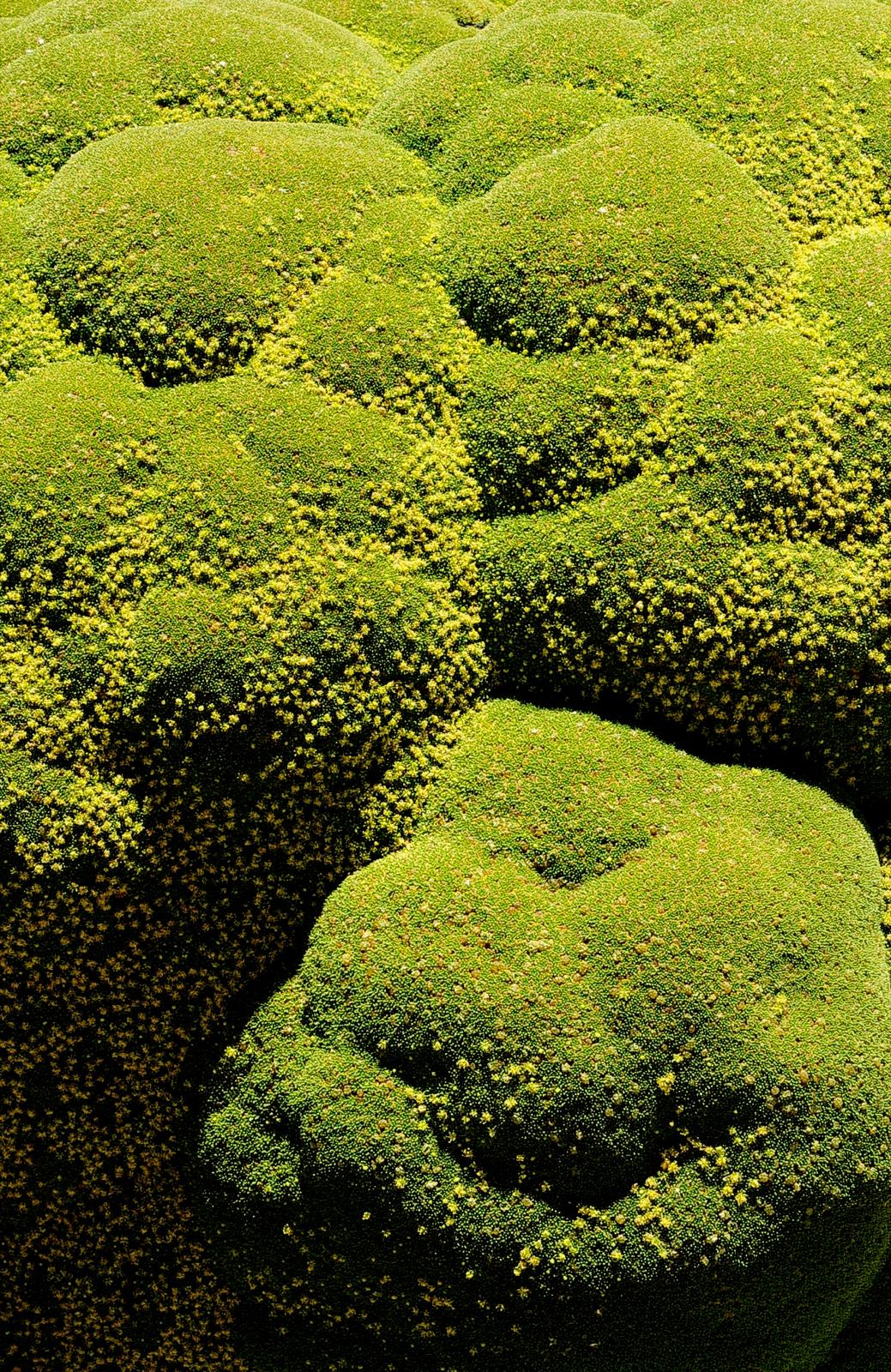
The green surface is tens of thousands of small rosettes packed so tightly that people sit on old cushions and they hold. It is the same arrangement as moss campion on our own mountains, a dome that sheds the wind and holds the day's heat, only built to the size of a car. The flowers are tiny and greenish-yellow, set flush into the surface, and easy to miss.
Its family tree points south. Azorella sits on an old branch of the carrot family, the Azorelloideae, and the group seems to have begun around the edges of Antarctica, when that continent was still green. As Antarctica cooled and iced over, some 30 million years ago, the lineage spread and split. One line climbed the spine of the Andes; others reached Patagonia, the Falklands and the subantarctic islands, where a cousin, Azorella selago, builds the same cushions on Marion and Kerguelen. The relationships are tangled enough that in 2016 botanists folded five neighbouring genera into Azorella, which now holds around 58 species.
It grows about a centimetre and a half a year. At that rate the large cushions are very old; estimates for the biggest run to thousands of years. The dense, resinous tissue also burns well, even green, and through much of the twentieth century yareta was cut by the ton for fuel, for cooking and for mines and railways. Hillsides lost cushions that had taken centuries to grow, and harvesting is now restricted across much of its range.
The resin is also medicine. Andean communities make hot infusions of yareta for diabetes, liver complaints and inflammation, put it on wounds and sore backs, and take it for altitude sickness. Chemists have found the plant full of unusual diterpenes, called mulinanes and azorellanes. In lab tests some protect the stomach lining and some are toxic to cells. None of it has been tried in people, and a 2024 study in mice found the extract did nothing for blood sugar and harmed the liver. For now it is interesting chemistry, not a remedy.
It is almost never grown in gardens. It wants what the Puna has: thin, gritty soil, strong sun, cold nights and very dry air, and it rots in humid summer heat. A crevice garden or alpine house in a dry climate is the only realistic home, and any plant offered for sale should be nursery-propagated, never dug.