

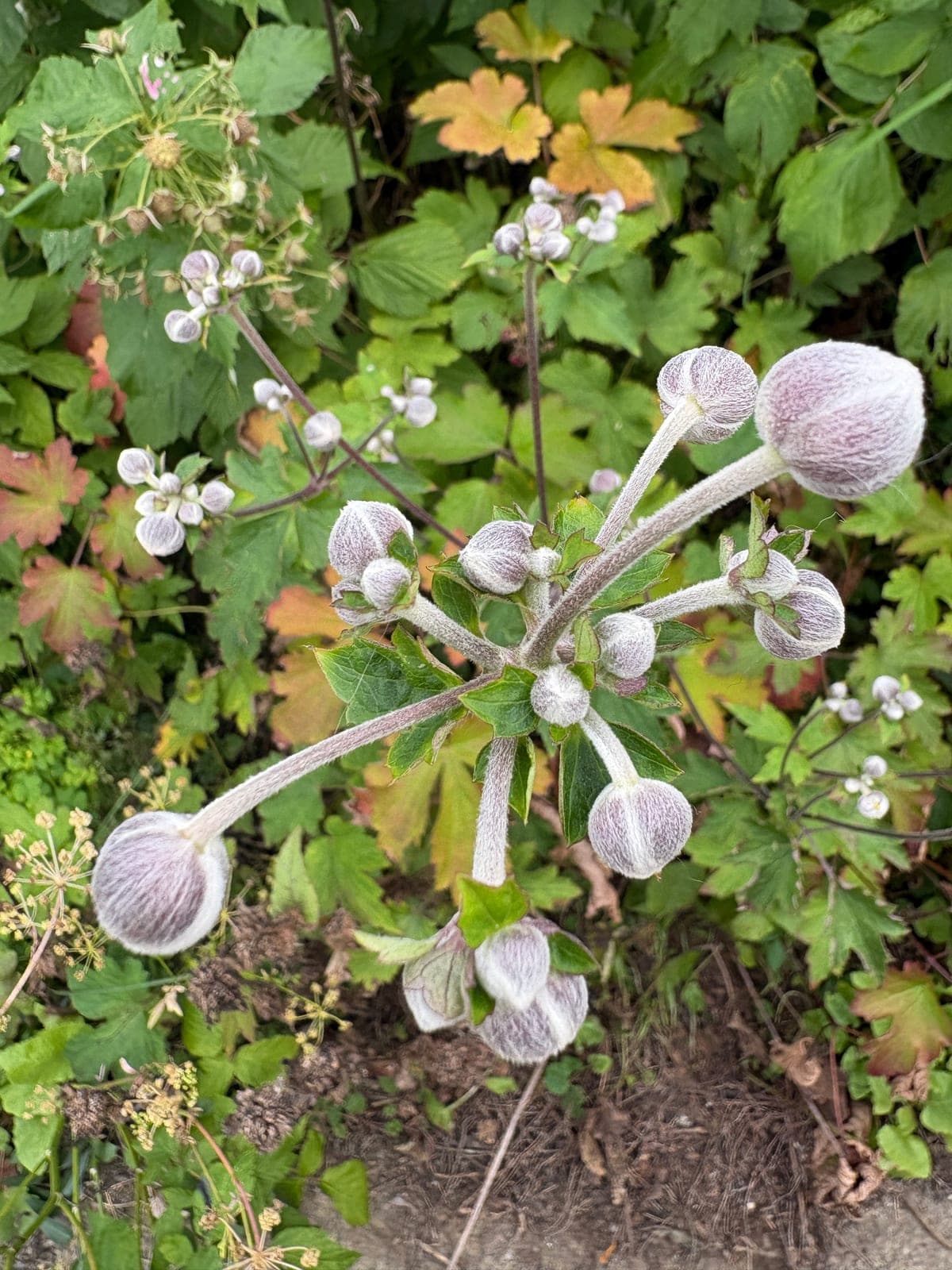
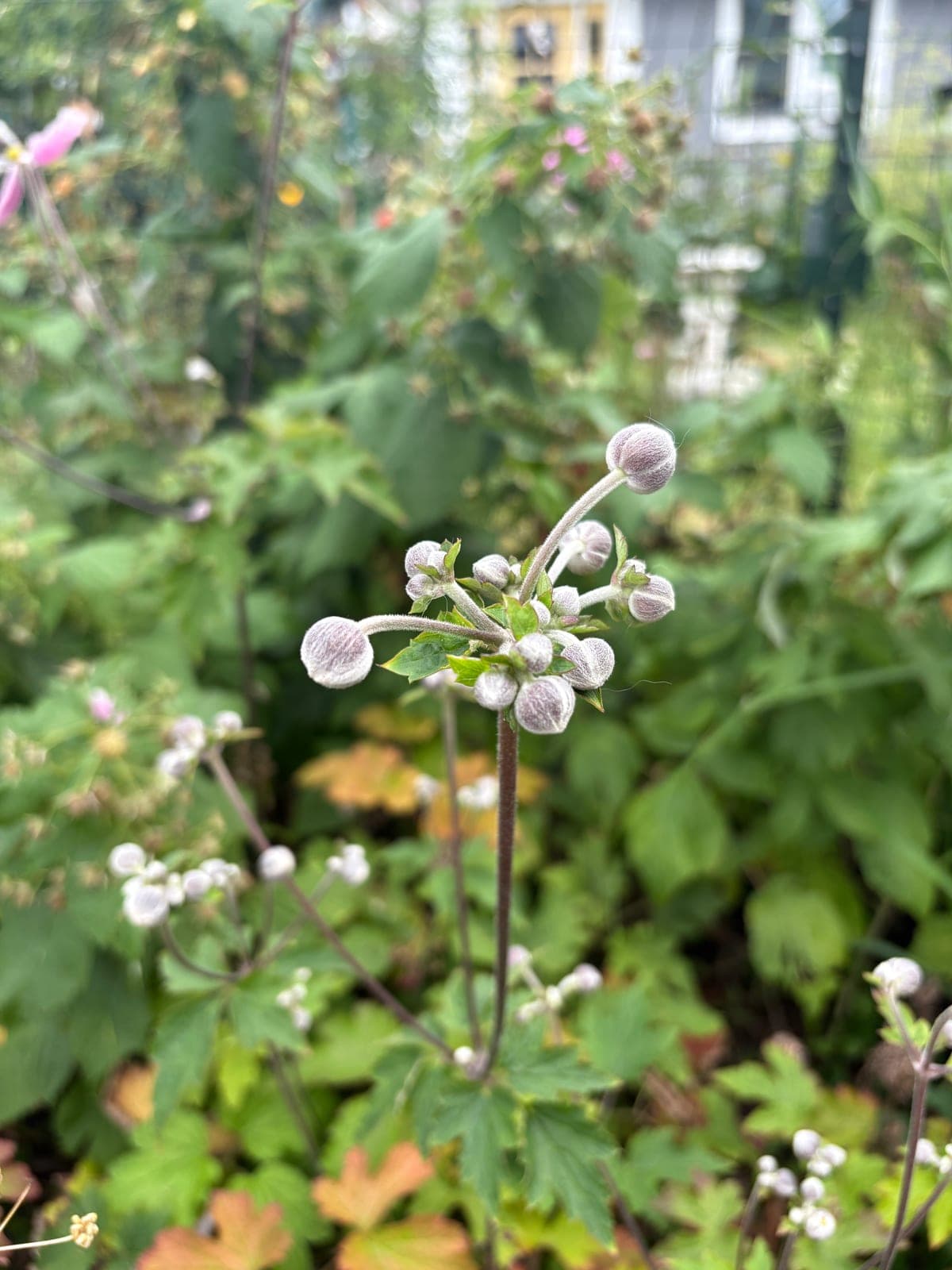
Grapeleaf anemone (often sold as Japanese anemone) is the perennial that saves the late-season garden: tall, wiry stems 3 to 5 feet high carry simple, elegant five-petalled flowers in white or soft pink around a yellow boss, from late summer through October, when almost everything else has finished. The lobed, grape-shaped leaves make a handsome mound all summer, and the silky seed heads follow the flowers. It is native to the Himalayas.
It wants rich, moist soil that drains, in part shade or full sun with afternoon shade in hot climates, and steady water through summer. Plant 18 to 24 inches apart in spring and give it a year or two to settle; once established it spreads by underground runners and can colonise vigorously, so position it where that is a virtue and edge it each spring where it is not. Hardy in zones 4 to 8.
Cut when the flowers are fully open; the buds on the stem keep opening in the vase. It pairs with late dahlias, hydrangea heads and the last zinnias. Bees work the open flowers hard in a season when forage is thin. Deer and rabbits leave it alone, and it has no serious pests. 'Honorine Jobert' and 'Robustissima' are the classic selections.
Powdery mildew
White or grey powdery coating on leaves - usually starting on older growth in humid conditions or when nights cool.
Improve air circulation by thinning plants. Apply neem oil or potassium bicarbonate spray at first sign. Avoid overhead watering.