
The solstice stain
St. John's Wort opens its buds around the longest day, and if you crush it the colour that comes off your fingers is not yellow at all.
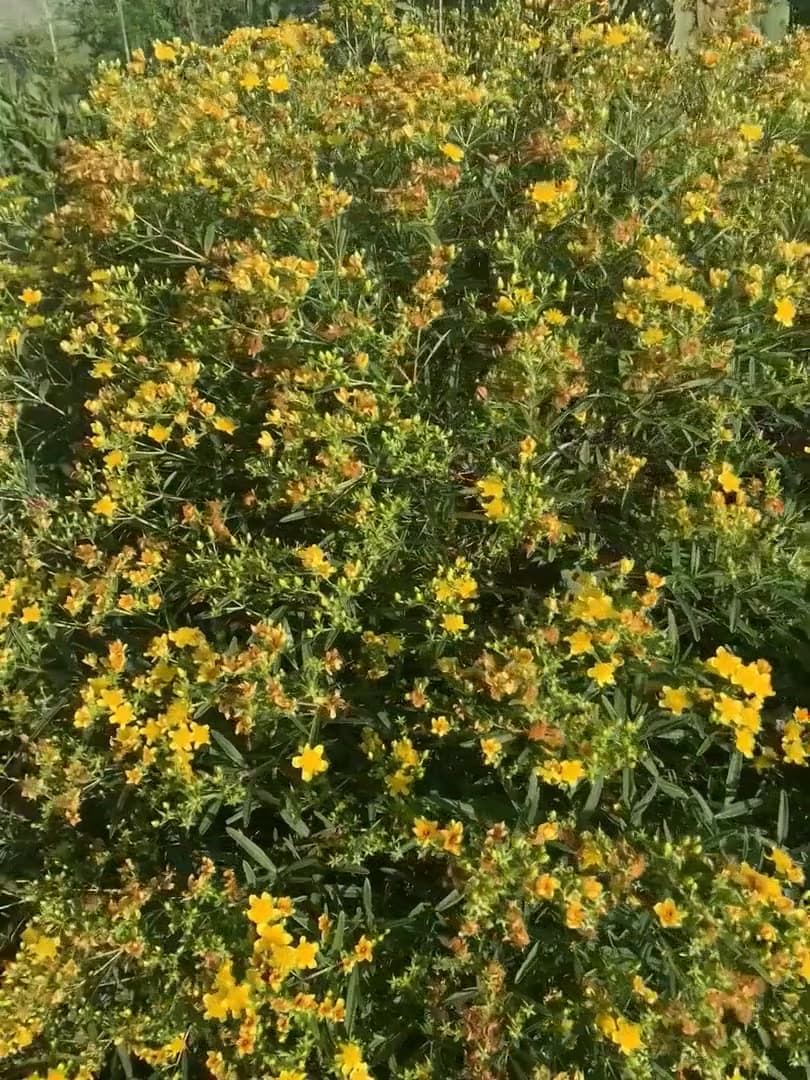
St. John's Wort, named for a saint, flowers around the feast of St. John on the twenty-fourth of June at midsummer. The bright five-petalled stars with their burst of stamens arrive just as the longest day tips over into the slow decline towards winter. People have gathered it at this exact moment for a very long time, hanging it in doorways and wearing it as protection against thunder and madness.
If you mean to make a tincture or an infused oil — the harvest is simple but particular. Wait for a dry, sunny morning and go out once the dew has burned off, because water on the flowers will turn an oil rancid before it ever turns red. Take only the top third: the flowering clusters, the fat unopened buds, and a few of the small upper leaves. The buds matter most. Pinch one and you will see why the timing is named for a saint and not a season — a deep blood-red bleeds out across your fingertips, the pigment the old herbalists called the herb's blood.
For an oil, pack the fresh flowers loosely into a clean jar, cover them with olive oil, and stand it on a sunny windowsill; over two or three weeks the oil draws the red out of the blossoms and turns the colour of garnet. For a tincture, the same fresh flowers go into a high-proof spirit and steep in the dark. Either way the rule is fresh, not dried — the red does not survive drying.